
Skis, golf bags and bikes: travelling to FRA with oversized luggage
A golf society of four lands a late-afternoon slot at a course near Bad Homburg, plays two rounds, and needs to be back at Frankfurt Airport for a red-eye the next morning. Four golf bags, four suitcases, one sedan booked by habit rather than by measurement. It doesn’t fit — not close. That mismatch between what a standard car can carry and what a golf bag or a boxed bike actually needs is the most common booking mistake we see with oversized sports luggage, and it’s entirely avoidable if the vehicle is matched to the cargo before the day of travel, not on the driveway.
Skis, snowboards, golf bags, boxed bikes and similar equipment don’t behave like ordinary suitcases. They’re long — often over 1.5 metres — rigid in places, and awkward to angle through a standard boot opening. Get the vehicle class right at booking and it’s a non-issue. Leave it until pickup and you’re relying on a driver improvising with a car that was never sized for the job.
What counts as oversized sports luggage
The category covers anything that won’t lie flat in a normal suitcase-shaped boot:
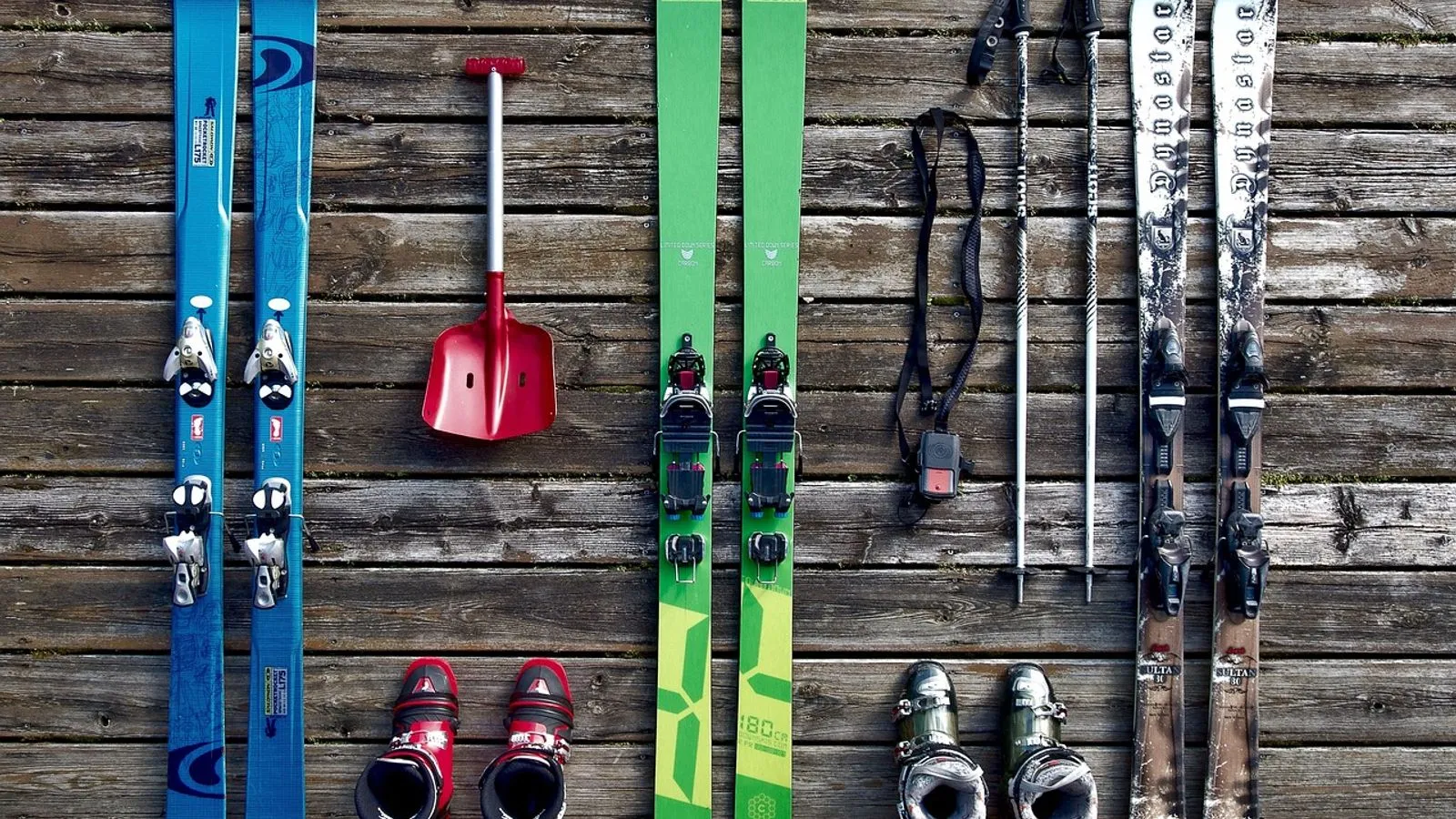
- Winter sports gear: ski and snowboard bags, typically 1.6 to 2.1 metres long, sometimes with boots and poles packed separately
- Golf equipment: a golf bag with a full club set, usually 1.0 to 1.3 metres and rigid along its length
- Bikes: packed in a bike box or soft bike bag, which airlines require to travel with pedals removed and the handlebars turned inward
- Everything else: surfboards, hard-cased instruments, larger medical equipment
One ski bag alongside two suitcases is manageable in most vehicle classes. The problem is combinations — skis and a golf bag for two travellers, or a bike box on top of a family’s normal holiday luggage.
Matching the vehicle to the cargo
Boot space varies more between a sedan and a van than most travellers expect. A current Mercedes E-Class saloon (W214 generation) holds around 465 litres with the rear bench upright, rising to roughly 925 litres with the seats folded to the window line — enough for two suitcases plus a single ski bag, usually not enough for an additional bike box without giving up the back seat. A V-Class, depending on wheelbase, offers 610, 1,030 or 1,410 litres with all seats in place, and up to around 5,000 litres with the rear rows folded flat. That’s the practical gap between “just about fits” and “still room on the way back from the resort.”
| Vehicle class | Typical load volume (seats up) | Realistic for |
|---|---|---|
| Sedan (e.g. E-Class) | approx. 465–540 l | 2 suitcases + 1 ski bag or 1 golf bag |
| Estate/wagon | approx. 600–700 l | 2–3 suitcases + ski bag + golf bag |
| Van, short (e.g. compact V-Class) | approx. 610 l, full seating | Family plus one bike box with reduced seat count |
| Van, long/extra-long | 1,030–1,410 l | Multiple ski bags, golf bags and bike boxes combined |
Volume alone doesn’t tell the full story — the length of the boot opening and whether the rear bench folds both matter. A 2.1-metre ski bag only fits diagonally or over a folded rear seat, even in a generously sized boot, and that option disappears the moment the car is fully occupied with passengers.
Declaring sports luggage at booking
Vehicle assignment happens before the car sets off, not at the kerb. Four details at booking are enough for dispatch to pick the right class:
- Type of equipment — skis, snowboard, golf bag, bike box, other
- Number of pieces — one golf bag per golfer is the norm for groups, not the exception
- Approximate dimensions — length above all, since it’s usually the limiting factor
- Combination with regular luggage — how many additional suitcases are travelling alongside
Those four points are what separates a sedan booking from a van booking. Mention a bike box only on pickup morning and the realistic options are a late swap to a larger vehicle — tight if there’s an early flight — or leaving something behind. The fixed price for a transfer already accounts for vehicle class among other factors; declaring oversized items accurately at booking means the quote reflects the actual cargo from the start, rather than a surprise at the pickup point.
What the airlines expect
The transfer gets you and your equipment to the terminal — the rules for the flight itself sit with the airline and need sorting separately from ground transport:
- Winter sports equipment usually travels within the standard checked-baggage allowance on most carriers, provided it meets their transport conditions for sports gear. Lufthansa, for instance, excludes this from its cheapest Economy Light fare, where ski equipment is charged separately.
- Golf equipment typically counts as a single item on most airlines: one golf bag with a full club set, balls and a pair of golf shoes can be packed together.
- Bikes must travel in a bike bag or box, with pedals removed, handlebars turned, and tyres deflated. Lufthansa requires sports baggage to be registered at least 72 hours before departure, online or by phone — missing that window risks complications at check-in.
Registering equipment with the airline is a separate step from booking the transfer. Keep the two declarations consistent — what you tell the transfer operator and what you register with the airline — so neither the vehicle nor the check-in desk is caught off guard.
Packing, check-in and the bulky-baggage desks at FRA
Frankfurt Airport has dedicated points for oversized luggage. In Terminal 1, the bulky-baggage counters sit between departure halls A and B, handling items that don’t travel on the standard belt system. Since Terminal 3 opened in April 2026, traffic is split across two terminals, linked by the free SkyLine people-mover, which covers the distance in around eight minutes — worth checking which terminal your airline uses before fixing the pickup point for your transfer.
Packing rules are consistent across sports equipment: sealed properly, labelled with name and contact details, sharp edges or bindings padded. A soft ski bag without a rigid frame is easier to angle into a boot than a stiff golf bag — worth factoring in when choosing a vehicle class. For group travel involving several players or a ski club outing, cargo volume adds up fast, and pre-booking a van avoids the scramble. Our fleet covers everything from sedan to van, and the table above is usually enough to estimate which class fits before you even book.
Travelling with several oversized items at once — a family with two ski bags and a snowboard bag, say — is most straightforward as a direct van booking. The step up from a sedan is modest, and it removes any risk of a last-minute vehicle swap.
Frequently asked questions
Do I need to declare oversized sports luggage when booking?
Vehicle assignment is based on the baggage type, quantity and dimensions entered at booking. Mentioning a ski bag or bike box only at pickup can mean the originally assigned vehicle is too small, forcing a late change of vehicle class.
Will a bike box fit in a standard sedan?
A typical bike box runs 1.3 to 1.4 metres long and generally only fits a sedan boot with the rear bench folded and no passengers seated in the back. For travelling with a bike box and rear-seat passengers together, an estate or van is the more reliable choice.
Does the transfer operator register sports equipment with the airline?
Registering oversized sports luggage with the airline is a separate step from booking ground transport, and it remains the traveller’s responsibility. Lufthansa, for example, requires sports baggage to be registered online or by phone at least 72 hours before departure.
What happens if I’m travelling with several oversized items at once?
Once multiple bulky items stack up — skis and a golf bag for two travellers, or a bike box on top of regular suitcases — a van becomes the more practical choice over a sedan or estate in most cases. Declaring this at booking ensures that’s the vehicle class actually assigned.
Does a golf bag count as one piece of luggage or several?
Most airlines treat a golf bag with a full club set, balls and a pair of golf shoes as a single item of sports baggage. For the transfer itself, the length of the rigid bag — not the number of components inside it — is what determines the vehicle class needed.
Once oversized items are declared in full, you can get a fixed price quote for the right vehicle class in advance, with nothing left to negotiate at the kerb.