The name board at arrivals: how a met pickup at FRA runs
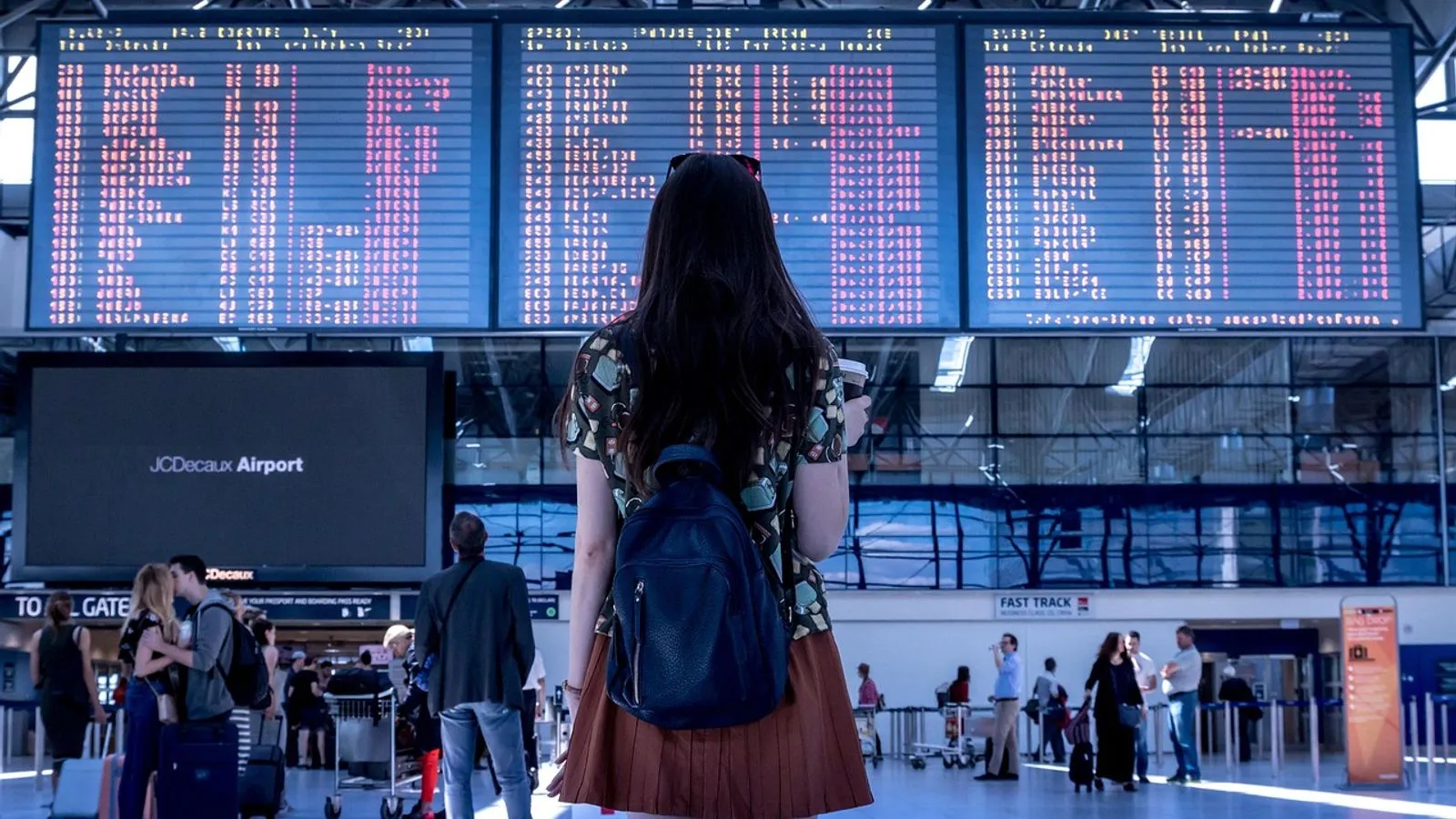
The wheels touch down, the seatbelt sign stays lit for another minute, and somewhere in the hold a suitcase is about to start its own short journey toward a carousel. At almost the same second, a driver checks a phone screen and sees the aircraft has landed — before most passengers have finished gathering their things overhead. That is where a met pickup at Frankfurt Airport actually begins, well before anyone lays eyes on a name board.
What happens next is, when it is organised properly, remarkably predictable. This piece walks through the minutes in order — from landing to the moment bags are loaded into the car — and covers the real differences between Terminal 1 and the Terminal 3 that opened in April 2026.
Tracking starts before the aircraft has parked
A pickup that works well doesn’t start at the gate; it starts on a screen. Flight-tracking tools show drivers a landing time in real time, not the scheduled one printed on a booking form. That’s why nobody is left guessing at the curb: if a flight lands 40 minutes early, the driver’s arrival at the meeting point shifts with it. If it lands late, the same logic applies in reverse. How operators handle longer delays, diversions or cancellations specifically is covered in a companion piece on what happens to your pickup when a flight is late.
For the driver, this means working backward from the confirmed landing time rather than the original booking. Most operators also build in a free waiting period after landing — typically around an hour on international arrivals — because immigration and baggage timing can vary noticeably by terminal and time of day.
From touchdown to passport control: the first minutes
After touchdown, it usually takes five to ten minutes for an aircraft to reach its stand and open its doors. For travellers arriving from outside the Schengen area, there’s an additional factor since 10 April 2026: the EU’s Entry/Exit System, or EES. At German border checkpoints, including Frankfurt Airport, non-EU nationals are now registered digitally on entry — passport data, fingerprints and a facial photo replace the traditional stamp. Nothing changes for EU citizens or nationals of Iceland, Norway, Switzerland and Liechtenstein.
Since the system went fully live, several major European hubs have reported noticeably longer queues at passport control, particularly when a handful of long-haul flights land close together. Self-service kiosks allow pre-registration, which helps but doesn’t eliminate the wait entirely. Travellers on non-EU passports should factor this into how much runway they leave — which is exactly why the free waiting hour built into a fixed-price pickup is a planning assumption, not a courtesy gesture.
Baggage claim: the quiet bottleneck
Baggage reclaim is rarely the most interesting part of a journey, but it does more than almost anything else to determine when a passenger actually reaches the arrivals hall. Depending on terminal, aircraft type and time of day, the gap between the first bags appearing on a belt and the last one for that flight can easily run 20 to 35 minutes. Drivers who work Frankfurt regularly get a rough feel for these patterns by airline and aircraft type, and time their own arrival at the meeting point accordingly — aiming to already be in position when the first passengers from that flight clear customs, not scrambling in after them.
Terminal 1 vs Terminal 3: where the driver actually stands
This is where the two terminals diverge in ways that catch first-time arrivals off guard.
Terminal 1 splits into three arrival halls — A, B and C. The central meeting point sits in Hall B, marked by a large cube suspended from the ceiling; drivers position themselves underneath it with their boards. Passengers clearing customs in Hall A keep right after the exit and walk into Hall B; those in Hall C keep left. Either way, the route ends at the same cube.
Terminal 3, in service since 23 April 2026, is built differently. Its arrivals hall sits on ground level and is reached from three piers — G, H and J. Pier G handles Schengen traffic, while piers H and J handle non-Schengen flights; Pier J, at roughly 600 metres the longest of the three, has three levels rather than two because long-haul arrivals need an extra floor for passport control. Inside the arrivals hall itself, drivers wait in the open concourse facing the customs exit, with cafés, shops and an information desk close by. Terminal 2 has been closed since April 2026, with all of its former traffic now split between Terminal 1 and Terminal 3.
Anyone needing to move between terminals — say, two pickups on the same day at opposite ends of the airport — normally rides the free Sky Line people mover, which links Terminal 1 and Terminal 3 in under eight minutes, around the clock, departing every two to three minutes. During scheduled maintenance windows, shuttle buses cover the same route, so the connection is rarely, if ever, unavailable.
Paper or tablet: what the name board actually looks like today
The classic printed sheet of paper still exists and still works reliably — for an unusual spelling, in fact, a large, clearly printed name is often easier to read at a glance than any screen. Alongside it, digital name boards on tablets have become common; they can be edited in seconds if a booking picks up a second or third traveller at the last minute, or if a company name reads more clearly than an individual’s. Both versions do exactly the same job: in a hall full of strangers, your own arrival needs to register in under a second, without anyone having to ask for directions.
Handing over the bags and walking to the car
Once eye contact and a quick check — usually just a surname and the flight date — confirm the match, the driver typically takes the luggage. That’s standard practice across most pre-booked pickups regardless of vehicle class. From there, the route to the car runs through the hall to a parking structure or a designated holding position, depending on terminal and where the vehicle is parked; at Terminal 3, the bus station sits directly on the arrivals level, which in practice means short, step-free routes to parked vehicles too.
The table below lays out the typical timeline for an international arrival, start to finish:
| Time | What happens |
|---|---|
| Landing (T+0) | Flight tracking confirms the actual landing time; driver times arrival at the meeting point accordingly |
| T+5 to T+10 | Aircraft reaches its stand, doors open |
| T+10 to T+25 | Passport control, including EES registration for non-EU passports |
| T+20 to T+35 | Baggage claim |
| T+30 to T+40 | Passenger reaches the hall; driver is waiting with the name board at the agreed meeting point |
| From T+35 | Bags handed over, walk to the vehicle |
If you miss each other: the phone protocol
Even with good planning, two people occasionally miss each other for a few minutes in a busy arrivals hall — often because a passenger, confused by hall naming, exits toward the wrong side. That’s exactly what the phone number on every booking confirmation is for: reachable directly, usually via WhatsApp as well, so a message gets through even without a local SIM card. In practice, one short call along the lines of “where exactly are you standing?” resolves a gap of a few metres within minutes. The habit that makes this work is the driver staying put at the agreed meeting point rather than wandering the hall looking — the two of you close the distance far faster than the first moment of uncertainty suggests.
For a broader look at how the terminals are laid out, our Frankfurt Airport guide covers orientation in more detail. And if you’d rather sort the logistics ahead of time, it only takes a minute to check a fixed price — no obligation attached.
Frequently asked questions
How do I recognise my driver in the arrivals hall?
The driver holds a name board with your surname — either printed or shown on a tablet — at the meeting point named in your booking confirmation: under the meeting-point cube in Terminal 1’s Hall B, or in the open concourse of Terminal 3’s ground-floor arrivals hall.
What happens if my flight is delayed?
Landing time is picked up automatically through flight tracking, so the driver’s arrival at the meeting point shifts to match it; a separate message usually isn’t needed as long as the flight number was entered correctly at booking.
Does Terminal 3 change how I should plan compared with Terminal 1?
Terminal 3 has a single ground-floor arrivals hall rather than the three separate halls — A, B and C — at Terminal 1, which tends to make orientation simpler; on non-Schengen arrivals through Pier J, the extra passport-control level can add slightly to the time before baggage claim.
How long does a driver wait for free after landing?
On pre-booked international pickups, a free waiting period of around an hour after confirmed landing is standard, since immigration formalities and baggage claim can take noticeably different amounts of time depending on terminal and time of day.
Does the new EES entry system affect travellers from the EU?
No — the Entry/Exit System applies only to non-EU and non-Schengen nationals, who are registered with a fingerprint and facial photo; entry checks for EU citizens and travellers from Iceland, Norway, Switzerland and Liechtenstein remain unchanged.