
Paying for an airport transfer: card, invoice or in the car
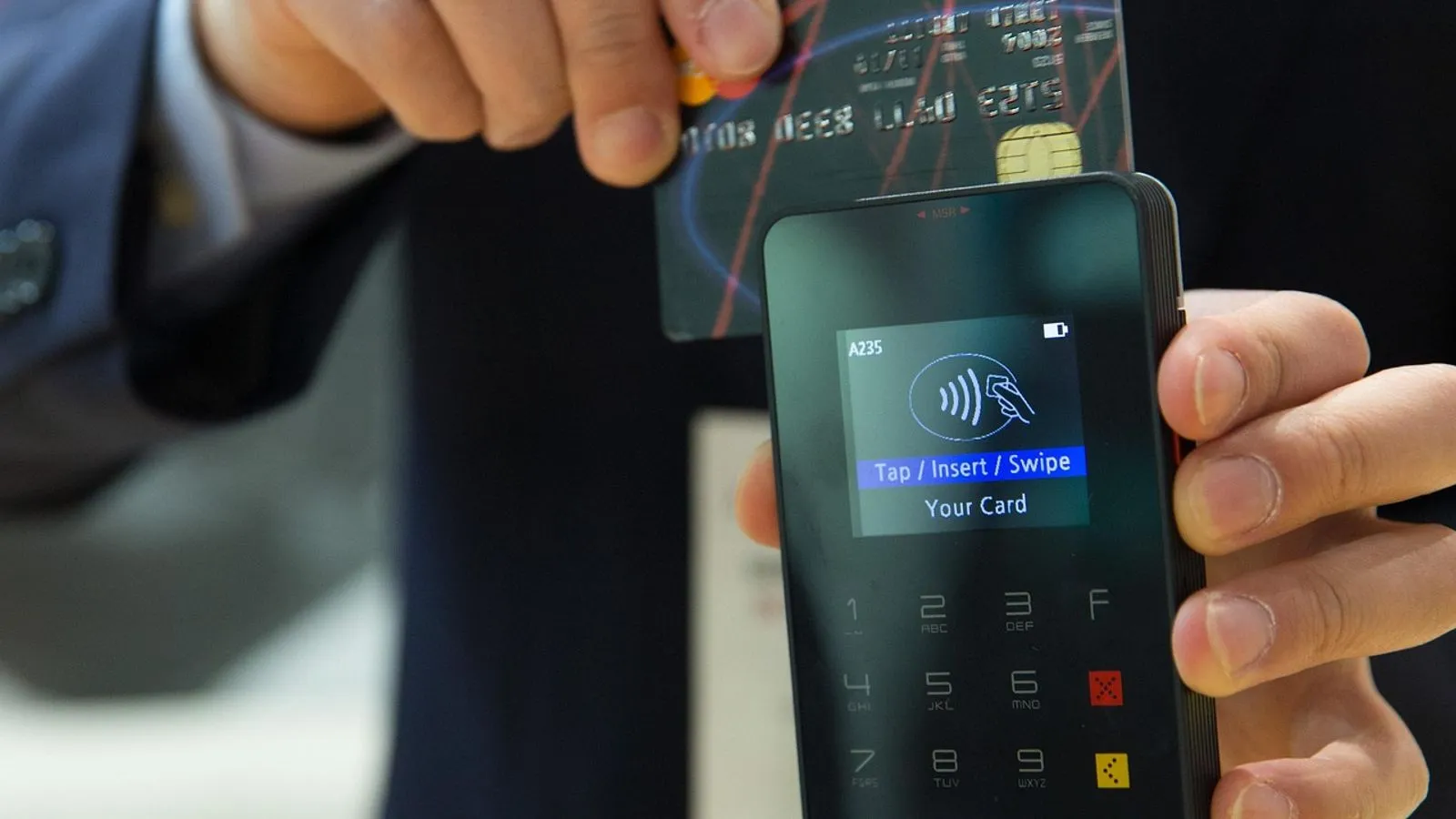
A card gets declined at the taxi rank, the cash in your wallet is the wrong currency, and boarding closes in forty minutes. It happens less often in Germany than it used to, but it still happens — which is exactly why paying for an airport transfer deserves a bit more thought than it usually gets. Prepaying by card, paying in the vehicle, billing a company account, and settling up with a foreign card are four genuinely different arrangements, and the differences matter most at the moment something doesn’t go smoothly. This piece walks through the options, explains why German taxis still aren’t legally required to take cards, and covers tipping — which works differently here than in a lot of neighbouring countries.
Prepaid vs. pay-in-the-car: the split that matters most
With a pre-booked, fixed-price transfer, the payment method is usually locked in at the time of booking — credit card, debit card, or invoice, depending on the provider. The amount is fixed before the vehicle is even dispatched, and the card is often charged closer to the pickup date rather than the moment you book. A street taxi works the other way round: the fare is only known once the meter stops, and payment happens right there at the kerb, usually cash or a card reader mounted in the vehicle. For anyone on a tight connection, that’s not a small distinction — with prepayment, the payment question is already settled by the time you land, whereas with a taxi it’s still open, and that’s exactly where most delays creep in when a card reader is offline or nobody has cash on hand.
Why card acceptance in German taxis still isn’t guaranteed
Plenty of travellers assume every taxi in Germany takes cards as a matter of course. Legally, that assumption doesn’t quite hold yet: there is currently no nationwide statutory requirement for taxi operators in Germany to accept card payments. The coalition government of CDU/CSU and SPD agreed in its May 2025 coalition agreement that businesses with direct customer contact — taxi operators explicitly among them — should in future be required to offer at least one digital payment option alongside cash. As of mid-2026, though, no finalised law with a firm start date had passed; the exceptions and transition periods are still being worked out politically. In practice, most taxis around Frankfurt already take cards and contactless payment because it’s good for business, but it isn’t a legal guarantee — particularly outside the city centre or in the occasional older vehicle without a card reader fitted. Anyone who has to rely on a card, say because they don’t have cash in the right currency, is better off confirming that before the ride starts, or booking a prepaid transfer where the question never comes up in the first place.
One small but telling detail: fixed-fare taxi trips in Frankfurt had to be logged through a digital trip register through the end of 2025, and since 1 January 2026 they run through the standard taximeter instead. It doesn’t change how a passenger pays, but it shows the fare-recording side of the taxi trade is still digitising.
Contactless payment and the 50-euro PIN threshold
Anyone paying by card inside the vehicle occasionally runs into a quirk of the German card system: for contactless payments made with a physical girocard (Germany’s standard debit card), the terminal typically asks for a PIN once the amount reaches 50 euros; below that, tapping the card is usually enough. For security, a PIN is also requested at random on some smaller amounts. Mobile wallets such as Apple Pay or Google Pay generally aren’t subject to that ceiling, since authentication already happens on the phone itself. For most airport transfers this only really matters for a tip or a small extra paid in the vehicle, since the actual transfer fare on a pre-booked ride is usually already settled online.
Invoices vs. receipts: what matters for business travel
A simple receipt is enough for a private trip. For business travellers billing the ride through a company, the form of the invoice is what counts. Under §33 UStDV, a simplified small-value invoice is sufficient up to a gross amount of 250 euros — issuer’s name and address, date, nature of the service, total amount, and tax rate, with no invoice number and no recipient details required. Above that threshold, a full invoice under §14 UStG applies, with all ten mandatory fields, including a sequential invoice number and the supplier’s tax number or VAT ID, plus the tax amount shown separately. A handwritten taxi receipt showing only a date and a total often doesn’t meet that bar, which can generate questions when the input VAT is claimed. The mechanics of collective invoicing and cost-centre tagging for companies with recurring transfer needs are covered in more depth in transfers on the company account. Anyone booking a transfer for a business trip should give the invoice recipient — and a cost-centre reference, if one applies — at the time of booking rather than trying to sort it out afterwards.
Foreign cards and currency
Travellers arriving without euros generally have an easy time paying for a pre-booked transfer with an international credit or debit card — the charge runs through the booking platform, and the card just needs to be enabled for online payments. Inside a vehicle, on a standard taxi ride for instance, it’s more reliable to rely on a widely accepted credit card (Visa, Mastercard) than on cash in a foreign currency: drivers rarely accept US dollars, British pounds, or other non-euro cash, and trying to change money at the arrivals terminal on the spot usually costs time and gets a poor rate. If you need euro cash anyway, withdrawing it in the arrivals hall before heading to the rank beats discovering the queue at the taxi stand while you’re still hunting for a cash machine.
Tipping: common, but never obligatory
Tipping in Germany is a voluntary acknowledgement of good service, not something baked into the fare as an expectation. On shorter rides, rounding up to the next whole euro is the usual move; on longer routes or when the driver has gone out of their way — carrying heavy luggage, navigating around traffic without fuss — something in the region of five to ten percent of the fare is common. Unlike in some countries, the tip is stated when paying rather than added to a slip afterwards or left on the seat: if the fare comes to 32 euros and you want to give 35, you say so at the point of payment, and the driver either rounds up directly or hands back the difference. On a prepaid fixed-price transfer, a tip is likewise optional and not built into the amount charged in advance — it’s given directly to the driver on arrival, if at all.
Payment methods at a glance
| Situation | Typical payment method | What to check |
|---|---|---|
| Pre-booked fixed-price transfer | Card online at booking, invoice by email | Confirm payment method and invoice recipient in advance |
| Spontaneous taxi at the rank | Cash or in-car card reader | Card acceptance isn’t guaranteed — ask before the ride starts |
| Business trip with a cost centre | Invoice to the company, often collective billing | Give the invoice recipient at the time of booking |
| International traveller without euro cash | International credit or debit card | Foreign-currency cash is rarely accepted |
For anyone who’d rather skip the payment question at the kerb altogether, it’s straightforward to get a fixed price in advance and attach a card at booking time — leaving nothing to settle on arrival day but the ride itself.
Frequently asked questions
Do I need cash for a taxi in Frankfurt?
Most taxis around Frankfurt now accept card or contactless payment because it makes business sense. There’s no nationwide legal requirement for taxis to take cards yet, though, so carrying some cash as a backup is still worth doing, especially outside the city centre.
Does contactless card payment in a taxi always require a PIN?
Once the amount reaches 50 euros, a terminal will typically ask for a PIN with a physical girocard; below that, tapping the card is usually enough. Mobile wallets like Apple Pay or Google Pay generally aren’t subject to that threshold.
Is a simple receipt enough to bill a transfer through my company?
A simplified small-value invoice under §33 UStDV is sufficient only up to a gross amount of 250 euros. Above that, a full invoice with every field required under §14 UStG is needed, or the input VAT deduction can be challenged on review.
Is tipping expected on a Frankfurt Airport transfer?
Tipping is voluntary and not a fixed expectation. Rounding up to the next euro is common on shorter rides, while roughly five to ten percent of the fare is typical for longer routes or extra help with luggage.
Can I pay a German taxi with a foreign credit card?
A widely used international card such as Visa or Mastercard is accepted by most card readers in German taxis. Cash in a foreign currency, on the other hand, is rarely accepted by drivers, so withdrawing euros beforehand or booking a prepaid transfer is the more reliable route.