Basel and northern Switzerland to Frankfurt Airport
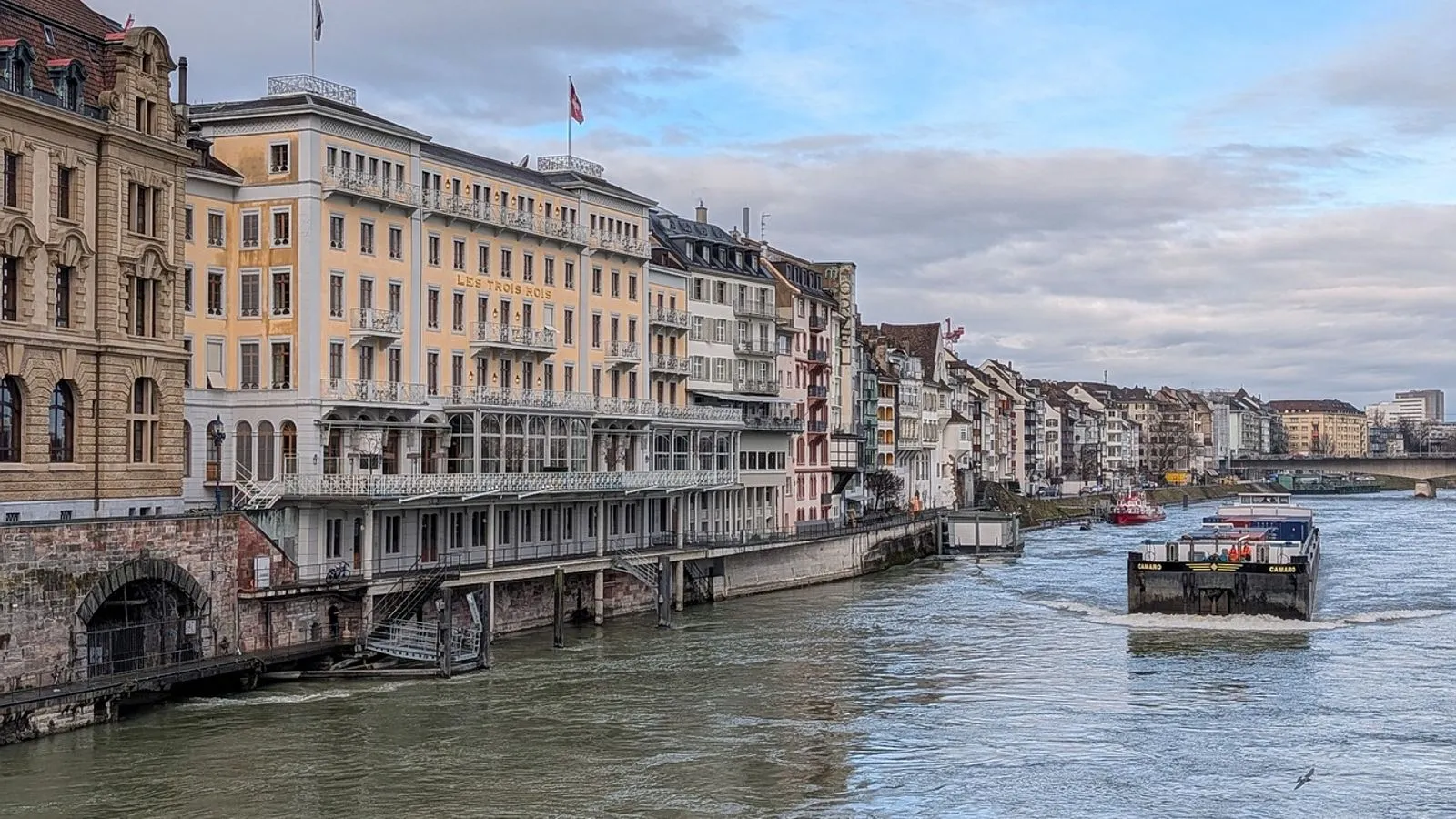
Ask a Roche or Novartis travel coordinator in Basel where their staff actually fly from for a long-haul trip, and the answer is often not the airport fifteen minutes from the office. A Frankfurt Airport transfer from Basel is a routine booking for the Rhine Knee’s pharmaceutical and chemical sector, precisely because the airport on their doorstep — however busy — was never built as a long-haul hub. This piece looks at why that gap exists, how the roughly three-hour drive up the A5 actually runs, and what the Swiss-German border adds to the journey in practical terms.
EuroAirport’s real limits
EuroAirport Basel-Mulhouse-Freiburg (BSL/MLH/EAP) is an unusual institution: one airport, jointly run by Switzerland and France, sitting on French soil with a dedicated customs road serving German arrivals too. For the 2026 summer season it operates roughly 100 direct destinations with more than 30 airlines — a genuinely strong European and Mediterranean network, plus a handful of long-haul links reachable through partner hubs such as Dubai via flydubai. What it does not have is a home long-haul hub of its own. Passengers wanting a nonstop to North America, East Asia, or destinations further afield typically don’t find one departing Basel.
Frankfurt is the opposite case: continental Europe’s largest Lufthansa and Star Alliance hub, with a dense daily intercontinental schedule. For a company headquartered in Basel sending staff to a plant in São Paulo or a conference in Singapore, three extra hours on the ground to reach a direct flight often beats two connections through smaller hubs — in both total travel time and reliability.
| Factor | EuroAirport (Basel) | Frankfurt (FRA) |
|---|---|---|
| Character | Regional airport, binational FR/CH | Germany’s largest aviation hub |
| 2026 summer network | ~100 direct destinations, mostly European/Mediterranean | Dense intercontinental network, many daily nonstops |
| Long-haul without connecting | Limited, mostly via partner hubs | Broad direct coverage to North America, Asia, Middle East, Africa |
| Typical traveller profile | Leisure, short and medium haul | Business travel, long-haul, corporate accounts |
The route: the A5 through the Rhine Valley
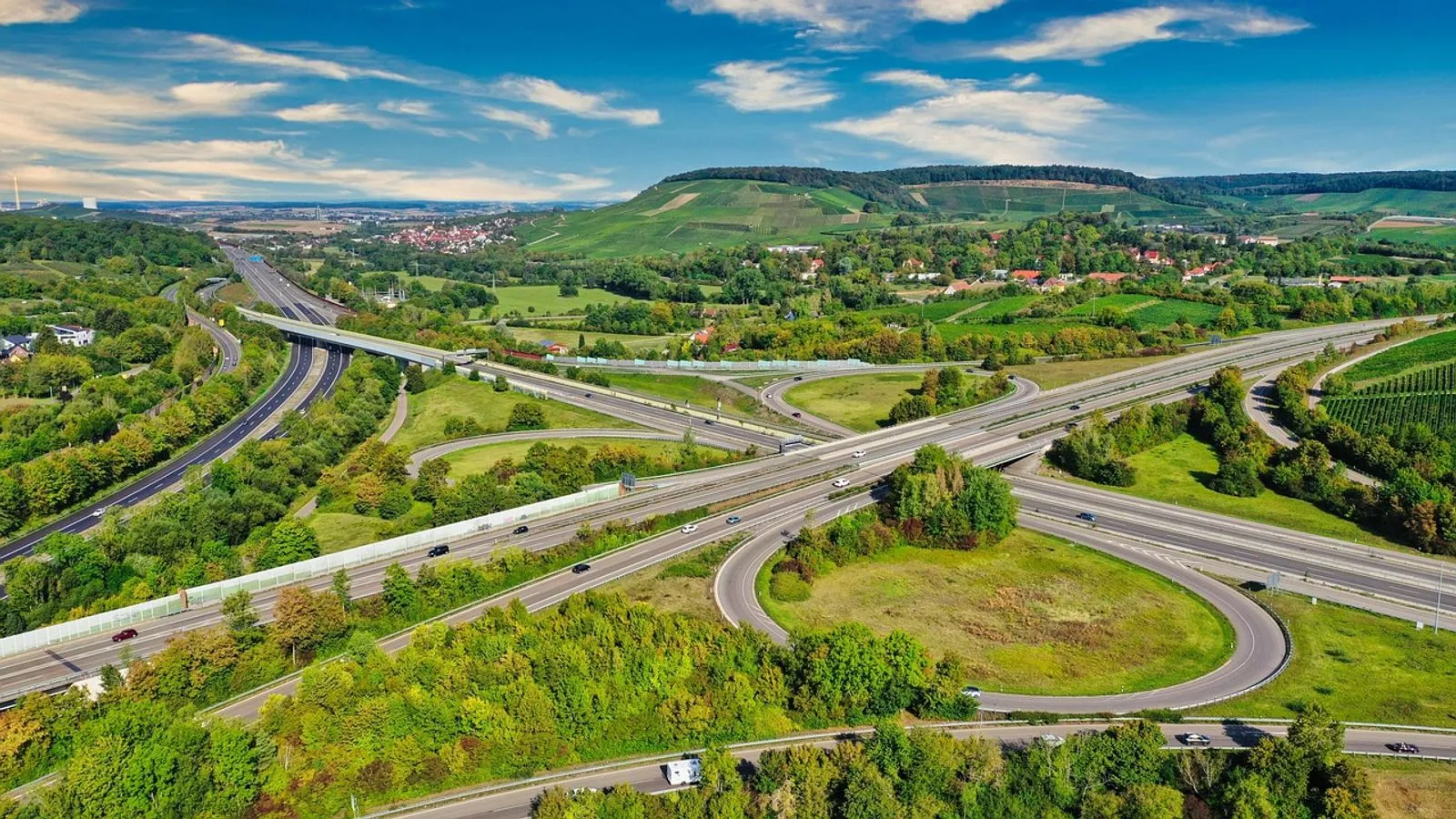
The drive from Basel to Frankfurt Airport runs almost entirely on the A5 — the classic Rhine Valley corridor through Freiburg, Offenburg, Karlsruhe, Mannheim/Ludwigshafen, and Darmstadt before reaching the airport interchange. The distance is around 320 kilometres, and typical journey time sits between three and three and a half hours, depending mainly on roadworks in the Upper Rhine Graben — a stretch that rarely runs entirely construction-free — and on traffic volume around Karlsruhe and Mannheim during peak hours.
This matters for timing an early long-haul departure. A transfer leaving Basel at four in the morning shouldn’t be planned against a bare three-hour figure; a realistic booking builds in margin for Rhine Valley fog, wildlife crossing rural feeder roads near the border, or a last-minute lane closure. A well-dispatched operator accounts for this automatically, so travellers aren’t the ones tracking live traffic data at 3 a.m.
The same logic holds for pickups from the wider Basel region — Lörrach, Weil am Rhein, and the southern Baden hinterland all funnel onto the same A5 axis, since no rail alternative on this distance matches a private transfer for reliability and luggage capacity.
The border: checks, ID, and time to allow
Switzerland is inside the Schengen area but not an EU member, which gives the Basel crossing its own character. Germany reintroduced temporary border controls at its land borders — including with Switzerland — from 2024 onward, and has repeatedly extended them; the main crossing points near Basel see spot checks, with occasional checks on secondary roads too. For transfer passengers, the practical takeaway is simple: keep a passport or national ID accessible rather than packed away, and allow a realistic 15 to 30 minutes of extra buffer for the crossing, more on busy travel days.
The EU’s Entry/Exit System (EES) is now live at Schengen’s external borders and records biometric data for travellers from outside the EU and Schengen area. Since the Basel-to-Frankfurt drive stays entirely within Schengen, EES has no direct bearing on the road journey itself — it becomes relevant only once a traveller reaches Frankfurt Airport and departs for, or arrives from, a non-Schengen country. Anyone connecting from Basel onto a long-haul flight should build in extra time at the airport for that biometric step rather than at the border on the way there.
Vignette, tolls, and what a fixed price already covers
Switzerland requires a motorway vignette for vehicles up to 3.5 tonnes. The 2026 sticker costs CHF 40 — unchanged since 1995 — and is now also available as a digital e-vignette rather than only a physical sticker on the windscreen. It runs from 1 December of the preceding year to 31 January of the following one, so the 2026 vignette stays valid into late January 2027. On a Basel-to-Frankfurt run this typically only applies to the short Swiss motorway segment before the border, if the pickup address itself sits on Swiss motorways; German motorways carry no toll for passenger cars.
This is exactly the kind of detail a fixed-price transfer absorbs on the operator’s side. The vignette, any toll, and the border-crossing time are the operator’s cost and planning problem, not the passenger’s. The price is agreed in euros beforehand and doesn’t move because of a Rhine Valley traffic jam, a longer-than-usual wait at the crossing, or a diversion around roadworks. Travellers booking from Switzerland still pay in euros, which sidesteps exchange-rate questions entirely — a small but real convenience for companies running standardised European travel-expense policies.
Who actually books this route
The traveller profile that shows up in practice is fairly consistent. Pharmaceutical and life-science staff shuttling between Basel and international corporate sites make up the largest share, followed by University of Basel researchers and affiliated-institute staff heading to overseas conferences, and private travellers who’d rather sit through a three-hour ground transfer once than route through two connecting airports for a single long-haul leg. Cross-border commuters add a smaller but steady segment too — people who already cross the Basel border routinely for work and simply value a transfer that turns an unpredictable drive into a fixed, bookable block of time.
Companies running these trips regularly tend to care most about clean invoicing and consolidated billing — covered in more depth in Transfers on the company account. For booking the route itself, the dedicated page is Basel to Frankfurt Airport transfer, with vehicle-class and pickup details.
Anyone planning the trip can check the fixed price in advance with no obligation, well before travel dates are locked in, on the booking page.
Frequently asked questions
How long does the drive from Basel to Frankfurt Airport take?
The A5 route through the Rhine Valley covers around 320 kilometres and typically takes between three and three and a half hours, depending on traffic and ongoing roadworks. Early long-haul departures benefit from an extra 30- to 45-minute buffer on top of that.
Do I need to show ID crossing from Switzerland into Germany?
A passport or national ID should be within easy reach, since Germany reintroduced spot checks at its border with Switzerland in 2024 and has extended them repeatedly. These checks apply at the main Basel crossings and occasionally on secondary routes as well.
Is a Swiss motorway vignette required for this trip?
The vignette requirement applies to the Swiss motorway section before the border, relevant if the pickup point itself sits on Swiss motorways; German motorways carry no toll for cars. On a booked transfer, the vignette is part of the operator’s vehicle costs and doesn’t appear as a separate line item in the fixed price.
Why do so many Basel travellers fly out of Frankfurt instead of EuroAirport?
EuroAirport’s 2026 summer network covers roughly 100 direct destinations, mostly across Europe and the Mediterranean, but offers limited long-haul options without a connection. Frankfurt, as Germany’s largest hub airport, carries a much broader intercontinental schedule, which matters most for business travellers on long-haul itineraries.
Can I pay for the transfer in Swiss francs?
The fixed price is quoted and settled in euros regardless of the Swiss pickup location. That keeps things straightforward for companies running standardised European travel-expense policies, without exchange-rate calculations on either side.