
Chauffeur service in Frankfurt: what you actually get for the upgrade
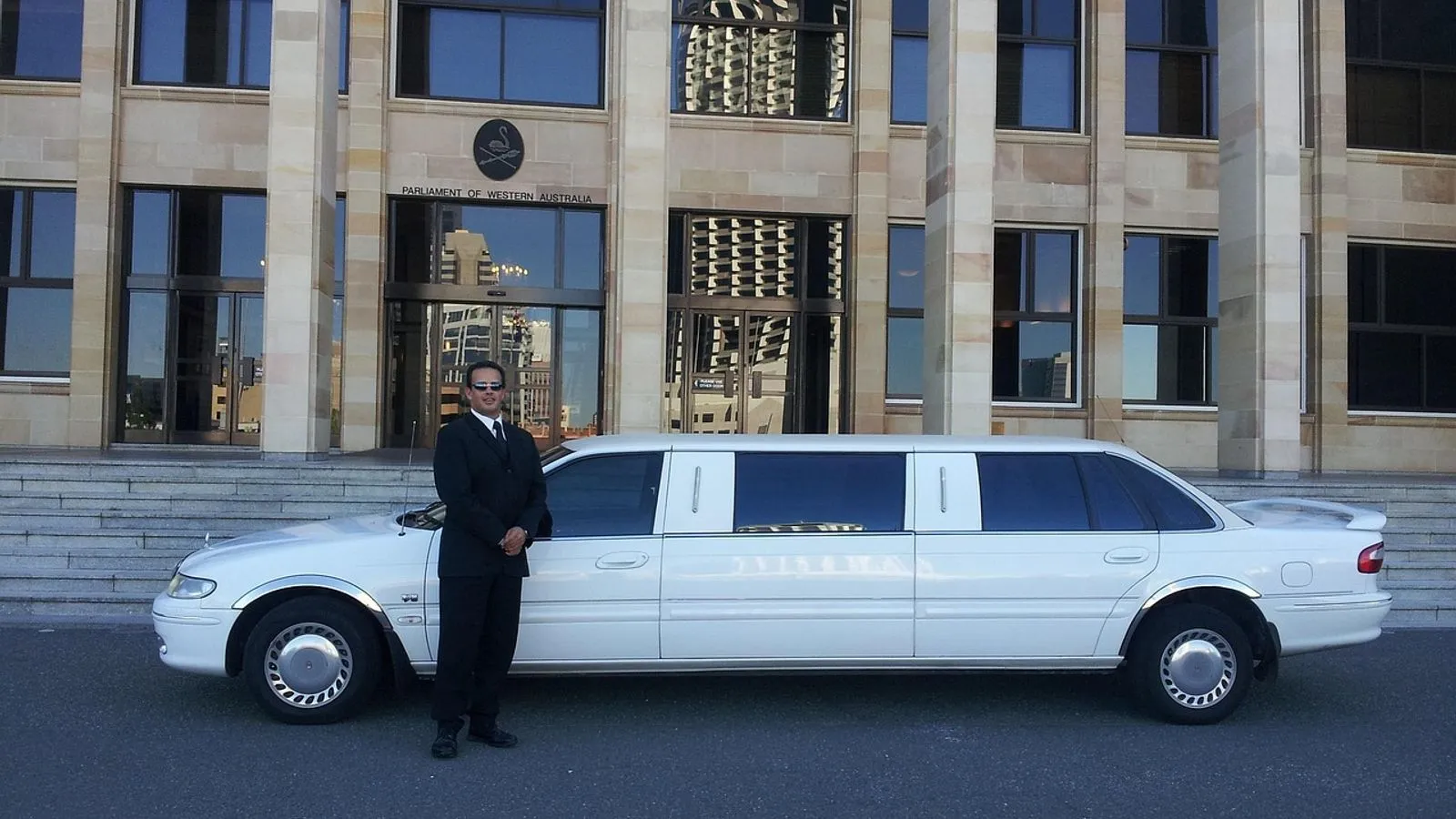
The difference usually shows up before you’ve even left the arrivals hall. Outside Terminal 1, a taxi queue is forming; a few metres further, a single driver stands holding a name board, already knows your flight number, and has had the car parked and ready for ten minutes. Most travellers file that under “nicer taxi,” but chauffeur service in Frankfurt is a separate transport category with its own licensing, its own driver qualification, and a different booking logic entirely. Understanding what you’re actually paying for when you move from a street taxi to a chauffeur means starting with how German law draws the line — not with marketing copy.
Chauffeur service is a licence category, not a brand word
Germany regulates paid passenger transport under the Personenbeförderungsgesetz (PBefG), and it splits commercial transport into two distinct operating models. Taxis operate under a service obligation within a fixed licensing area, can wait at ranks and be flagged down on the street, and run on a regulated meter tariff. Rental cars with driver — Mietwagen mit Fahrer, the licence category chauffeur firms, limousine services and most pre-booked airport transfers operate under — work differently: every trip has to be booked in advance, and the car is generally required to return to its operating base after each job unless a new booking has already come in en route or at the base. This “return obligation” is not a relic. Germany’s Federal Court of Justice (Bundesgerichtshof) explicitly reaffirmed it in June 2026, ruling against a rental-car operator dispatched through Uber X, and confirmed the obligation applies in full even in purely domestic cases. In practice, that means a chauffeur car is never cruising for street pickups — every job is pre-arranged, which buys predictability at the cost of needing lead time.
Why a normal driving licence isn’t enough
Both taxi and rental-car drivers need more than a category B licence — they need the Personenbeförderungsschein, the “P-Schein,” under Section 48 of Germany’s driving licence regulation (FeV). Requirements include a minimum age of 21, a category B licence held for at least two years, proof of medical and, for drivers who are 50 or older or whose certificate has expired, renewed psychological fitness, plus a clean police certificate of good conduct. The exam itself is taken at the local Chamber of Industry and Commerce and covers local geography, the basics of passenger transport law, and how to handle hazardous situations. The certificate is valid for five years and then has to be renewed with a fresh medical check. That’s the statutory floor — it applies to anyone in Germany moving paying passengers, whether or not there’s a taxi sign on the roof.
How chauffeur firms actually vet drivers
The P-Schein sets the legal minimum, not the operational bar. Chauffeur operators that depend on repeat business travellers typically screen further: driving history in the relevant vehicle class, local knowledge that goes beyond the exam syllabus (trade-fair grounds, the banking district, terminal access roads), the ability to work with multilingual guests, and a professional appearance standard. Many firms request an updated background check more often than the law requires and run recurring training in defensive driving and de-escalation. None of that is unique to Frankfurt — it’s simply what operators who depend on returning corporate clients tend to do, because a driver who shows up unprepared for a board-level pickup is a reputational risk the firm can’t absorb.
Vehicle standard: what “premium class” means in practice
In practice, chauffeur service in Frankfurt sits in the business or executive sedan category — four-door cars with boot space for two to three large suitcases, supplemented by seven- or eight-seat vans for groups. Two things matter more than the badge on the bonnet: a defined maximum fleet age (three to five years is the industry norm), and the absence of any taxi markings — rental cars with driver are legally barred from carrying a roof sign or otherwise presenting as a taxi, which is also the visible marker of the licensing split described above. Climate control, Wi-Fi and charging cables are now baseline expectations, not upsells.
Discretion and waiting time: where the day-to-day difference actually lands
The real difference rarely shows up in the car itself — it shows up in the process. A pre-booked chauffeur tracks the flight number and adjusts pickup time automatically for delays, with no extra charge for the wait; roughly 60 minutes of free waiting time after landing is standard practice industry-wide for airport pickups. Conversation stays off if you want it off, phone calls aren’t overheard or commented on, and luggage gets loaded without being asked. A rank taxi can absolutely deliver the same experience — it just depends far more on the individual driver than on a guaranteed service standard.
Corporate accounts and invoicing
For companies, the paperwork is often the real reason for switching. A corporate account bundles individual trips into a single monthly invoice with proper VAT documentation under German tax law, can be tagged by cost centre, and removes the need for travellers to pay out of pocket or on a corporate card. We cover the mechanics of that in more detail — from cost-centre tagging to expense reconciliation — in our piece on putting airport transfers on the company account.
When the upgrade actually earns its keep
Chauffeur service pays off where the return obligation and the tighter driver vetting genuinely change the outcome: picking up a business partner where first impressions matter, very early or late flights with no realistic public-transport alternative, multi-stop days built around several meetings, or trips where confidentiality in the car actually matters. For a single short daytime hop where a rank taxi is standing right there, the marginal benefit is thin — price is driven mainly by distance and vehicle class, not the service label. If you want the minute-by-minute detail of how a met arrival actually runs, our walkthrough of name-board pickups at Frankfurt Airport covers that separately.
Taxi vs chauffeur, side by side
| Feature | Taxi | Rental car with driver (chauffeur) |
|---|---|---|
| Legal basis | PBefG, fixed licensing area | PBefG, return obligation to base |
| Fare | Regulated meter tariff | Fixed price agreed in advance |
| Availability | Rank, street hail, radio dispatch | Advance booking only |
| Markings | Taxi sign, uniform livery | No external markings |
| Driver qualification | P-Schein (statutory minimum) | P-Schein plus in-house vetting |
| Typical use case | Spontaneous short trip | Airport transfer, business meetings, roadshows |
If a Frankfurt Airport run is already on your calendar, it’s worth working out the fixed price in advance through our booking page rather than gambling on taxi availability on departure day.
Frequently asked questions
What legally separates chauffeur service from a taxi?
A chauffeur operates under the rental-car-with-driver licence category and is bound by the return obligation: the car must go back to its operating base after each trip unless a new booking has already arrived. A taxi, by contrast, is allowed to wait at ranks and be flagged down on the street — Germany’s Federal Court of Justice reaffirmed this split as recently as 2026.
Does a chauffeur need special training?
Anyone moving paying passengers in Germany needs the Personenbeförderungsschein under Section 48 of the driving licence regulation — minimum age 21, a category B licence held for two years, medical and psychological fitness, and a clean background check. Chauffeur firms frequently add their own local-knowledge and client-handling training on top of that legal baseline.
Is chauffeur service at Frankfurt Airport more expensive than a taxi?
Price for both operating models is driven mainly by distance and vehicle class, not the service label itself. The real difference is the pricing mechanism: a taxi runs on a metered tariff, while chauffeur service is agreed as a fixed price in advance that already accounts for arrival delays and waiting time.
Can you book a chauffeur for several hours or a full day?
Beyond point-to-point trips, rental-car-with-driver firms offer hourly or daily bookings where the driver and vehicle stay reserved for a defined period — used for roadshows, client visits, or itineraries with several stops between the city centre and the airport.
Do you still wait around at the airport with a pre-booked chauffeur?
No — with pre-booked chauffeur service there’s no queuing at a taxi rank, because the driver is already assigned before your flight lands and is tracking your arrival. The only wait is the walk from the arrivals hall to the car that’s already there.