Cologne to Frankfurt Airport: race the ICE or ride door to door
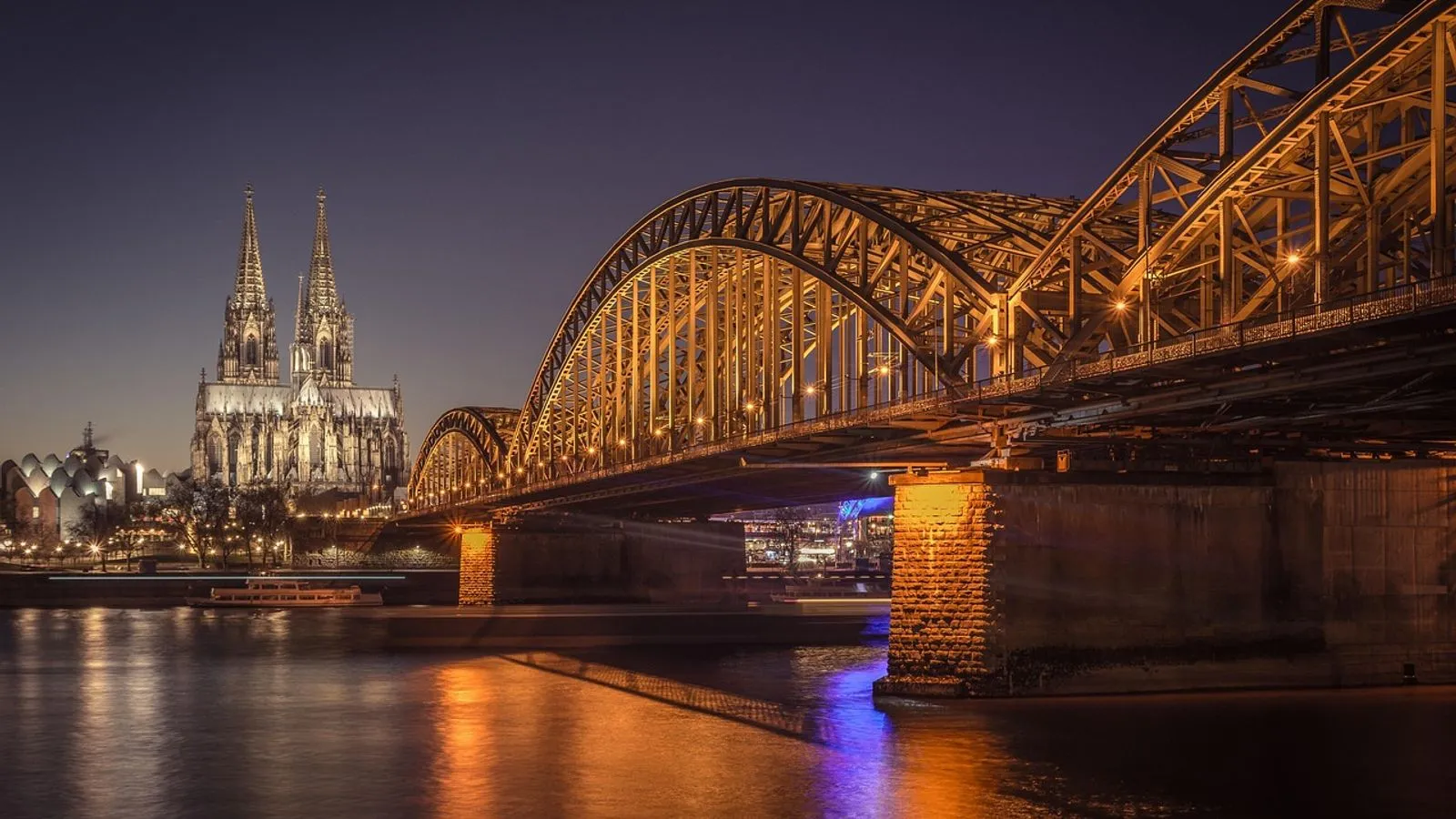
Cologne is one of the few German cities where flying via Frankfurt genuinely competes with the train on paper, thanks to a dedicated high-speed line that shaves the journey down to under an hour. Anyone comparing a Frankfurt Airport transfer from Cologne against that train has to start from an honest place: the ICE is fast, frequent, and for a solo traveller with carry-on luggage, hard to beat on a spreadsheet. But a spreadsheet doesn’t account for the walk to Cologne Hauptbahnhof at half past five in the morning, four suitcases for a family of four, or a delayed long-haul flight landing at ten at night with no more direct trains running. This is where the calculation gets interesting.
Cologne to Frankfurt Airport by rail: the benchmark, honestly stated
The Cologne–Rhine/Main high-speed line, open since 2002 and built for speeds up to 300 km/h, is the reason this route sets the bar for German rail transfers. The fastest ICE services cover Cologne Hauptbahnhof to the airport’s long-distance station (Fernbahnhof) in roughly 51 to 55 minutes, with up to 43 direct connections spread across the day. For one passenger with hand luggage and a train that lines up with their flight, that’s genuinely the most practical option available — faster than crossing Frankfurt itself by car in rush hour, and cheaper in time than driving the A3 door to door. Any fair comparison has to start by admitting that.
When the timetable wobbles: rail punctuality in 2026
Scheduled time is one thing; actually arriving on it is another. In February 2026, long-distance punctuality across the Deutsche Bahn network sat at roughly 59 percent, down from 66 percent the same month a year earlier — meaning close to one in three long-distance trains arrived with a noticeable delay. Passenger-weighted punctuality, which also accounts for missed connections, came in at around 65 percent. Those figures cover the entire long-distance network rather than the Cologne–Frankfurt line specifically, but they explain why regular business travellers on this corridor rarely bank on a single train when a flight is on the other end. A service scheduled for 51 minutes that runs 20 minutes late eats exactly the buffer a traveller would otherwise have for the walk to the terminal, security, and the last boarding call.
The A3 alternative: distance and roadworks in 2026
Driving instead means roughly 191 kilometres on the A3, about one hour fifty minutes in normal traffic — slower than the train on paper, but with no connection to make and a schedule that answers to nobody but the driver. The A3 carries somewhere between 80,000 and 100,000 vehicles a day along this stretch, making it one of the busiest motorway corridors in the country, so congestion is closer to the rule than the exception. Two roadworks are worth knowing about for 2026: between the Siegburg West service area and the Bonn/Siegburg interchange, bridge work on the directional carriageway runs until May 2027, with a detour recommended via the A560. And right at the Frankfurt end, between Kelsterbach and the Mönchhof triangle, resurfacing work starts on 22 July 2026 and narrows the carriageway to a single lane heading toward Cologne until 10 October 2026 — on the last few kilometres before the airport, no less. Anyone driving themselves through that window should build in extra time for parking and the final approach; a transfer operator tracks the current roadworks and factors the buffer in automatically.
Door to door from the Veedel: what the train can’t do
The real difference doesn’t show up on a timetable — it shows up at the front door. Anyone living in Ehrenfeld, Sülz, Nippes, the Südstadt or Deutz first has to get to Hauptbahnhof, luggage in tow, through one of the busiest stations in Germany, often via a connecting tram or bus. That leg never appears in a journey planner, but it adds itself onto the 51-minute train ride regardless. A transfer picks up at that exact address, whether it’s a third-floor walk-up or a side street the local taxi rank doesn’t reliably cover. Luggage goes in once and comes out at the terminal kerb, with no change at Hauptbahnhof, no walk to the Fernbahnhof platform, and no dependence on whether the lift at the platform happens to be working that morning. For a solo traveller with light luggage, that’s a comfort upgrade. For everyone travelling with more, it becomes the actual argument.
Groups, luggage and late landings
A family of four with a stroller, two large suitcases and hand luggage faces a different calculation than a business traveller with a laptop bag. Four separate tickets, a shared connection under time pressure, and then the walk through the Fernbahnhof at the other end — none of that is a disaster, but it’s coordination that a single booking covering the whole group sidesteps entirely. Our article on group travel to Frankfurt Airport goes into vehicle choice for parties of five or more in more detail. The return direction raises a related issue: when a long-haul flight from somewhere like New York or Dubai lands late in the evening, the last direct ICE to Cologne is eventually gone, and the alternative means changing trains in the middle of the night. A pre-booked transfer tracks the flight by number and adjusts the pickup time to the actual landing, however late it runs — our piece on flight delays and your pickup explains exactly how that tracking works in practice.
When a transfer from Cologne actually earns its keep
The table below summarises where each option has the edge:
| Factor | ICE | Car (A3) | Transfer |
|---|---|---|---|
| Scheduled travel time | ~51–55 min | ~1 hr 50 min | ~1 hr 50 min–2 hrs |
| 2026 reliability | ~59% on-time (long-distance network) | Depends on roadworks | Fixed pickup, flight-tracked |
| Door to terminal | No — plus the walk to Hauptbahnhof | Yes, to the car park | Yes, direct to the terminal |
| Luggage and groups | Workable within limits | Depends on the vehicle | Built into the booking |
| If the flight runs late | No connection to the flight | Your own risk to manage | Pickup time adjusts automatically |
For a solo traveller with light luggage and a train that lines up, the ICE remains the fastest option on paper — but the 2026 reliability figures take some of the shine off that edge the moment a single flight depends on a single train. What actually shapes the cost of a transfer — distance, vehicle class, extras — is broken down in our article on what shapes an airport transfer price. Anyone weighing the fixed Cologne to Frankfurt Airport transfer route for their own trip can work out the price in advance through our booking page, rather than gambling on a single train connection on departure day.
Frequently asked questions
How long does the ICE take from Cologne to Frankfurt Airport?
The fastest services on the Cologne–Rhine/Main high-speed line reach the airport’s Fernbahnhof in roughly 51 to 55 minutes, with up to 43 direct trains a day spread across the timetable.
How reliable is the Cologne–Frankfurt ICE right now?
Long-distance punctuality across the Deutsche Bahn network stood at around 59 percent in February 2026, down from 66 percent the year before. That figure covers the whole network rather than this route alone, but it shows why a single train connection carries some risk when a flight is waiting at the other end.
How long does the drive from Cologne to Frankfurt Airport take?
Via the A3 it’s roughly 191 kilometres, about one hour fifty minutes in normal traffic. Through 2026, drivers should allow extra time for bridge works near Bonn/Siegburg and, from 22 July, a single-lane stretch between Kelsterbach and the Mönchhof triangle just before the airport.
Who actually benefits from a transfer despite the good rail link?
A booked transfer pays off most for groups travelling with real luggage, for addresses away from Cologne Hauptbahnhof in neighbourhoods like Ehrenfeld or Sülz, for very early departures, and for late or uncertain landings where a fixed pickup time beats relying on the last possible train connection.
Does a transfer from Cologne cost more than an ICE ticket?
That depends on vehicle class, passenger count and luggage volume rather than any fixed markup over the rail fare. For groups in particular, the maths often evens out once several separate train tickets and a connecting leg from the Fernbahnhof are added into the total.