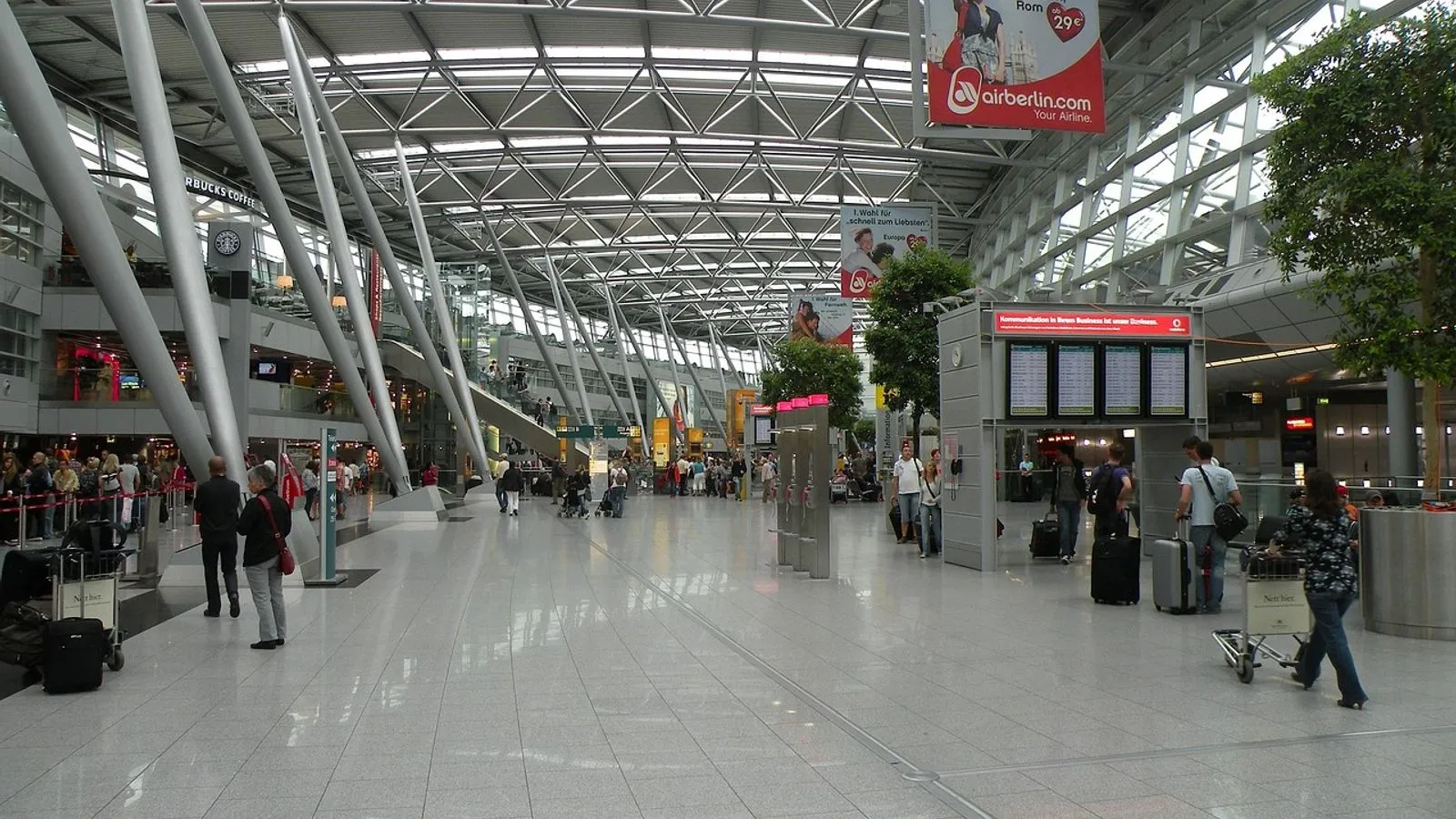
Wheels down at FRA: from gate to car in under half an hour
Most of the clock between touchdown and the car park doesn’t get eaten by walking. It gets eaten by queueing — specifically, at one single pinch point that most first-time arrivals don’t know exists until they’re standing in it. A Frankfurt Airport arrival can be genuinely quick, often 25 to 35 minutes gate-to-car even on a busy afternoon, but only if you know which steps cost time and which don’t. This piece walks the route in order: passport control, baggage, the right exit, and the moment to message your driver.
The first bottleneck: which lane you’re in
Land in Terminal 1 and you’ll walk down to Level 2, into one of three arrivals halls — A, B or C — depending on which gate and airline brought you in. Terminal 3, which went into service on 23 April 2026, was built with shorter internal distances: piers G, H and J all feed into a single, generously sized arrivals level, so there’s less corridor between the aircraft door and passport control than in the older terminal. If your aircraft parked away from a jet bridge, add five to ten minutes for the bus transfer — that time can’t be planned away, only budgeted for.
If your gate and your pickup point end up on opposite sides of the airport, the free SkyLine people mover links Terminal 1 and Terminal 3 in around eight minutes, running around the clock. In practice this rarely matters, because arrival terminal and pickup point are almost always the same one — but it’s worth cross-checking your gate against your booking confirmation before you assume otherwise.
EasyPASS or EES: the lane that decides your speed
This is where most of the time difference actually comes from. Germany runs two separate lanes at border control, and they move at very different speeds:
| Traveller type | Control lane | Typical time |
|---|---|---|
| EU, EEA and Swiss nationals; holders of a German residence permit | EasyPASS (automated e-gate) | 1–2 minutes |
| US, Hong Kong, South Korean and Taiwanese nationals (after one-time registration with the Federal Police) | EasyPASS | 1–2 minutes |
| All other third-country nationals on a short stay | Entry/Exit System (EES) kiosk enrolment | 5–15 minutes, more on first use |
| Holders of a Schengen residence permit, EU Blue Card or settlement permit | Exempt from EES | Same as EU citizens |
The EU’s Entry/Exit System went fully live across German airports on 9 April 2026, after a phased rollout that started at Düsseldorf on 12 October 2025 and reached Frankfurt and Munich in the following weeks. It applies only to non-EU/EEA nationals on short stays of up to 90 days in any 180-day period: on first entry, the kiosk records four fingerprints and a facial photo, and the old ink passport stamp is gone for good. Fraport has set aside 218 kiosks across Terminal 1 and Terminal 3 combined for this step. If it’s your first time going through the system, budget an extra 15 to 20 minutes — every entry after that is noticeably faster, because your biometric data is already on file.
For EU passport holders, nothing about this changes anything: you still use EasyPASS or a staffed lane and are typically through in a few minutes regardless of what EES is doing on the other side of the hall.
Baggage in Terminal 1 versus Terminal 3
Once you’re past passport control, the display boards tell you which belt your flight is assigned to. Terminal 3 runs up to 15 baggage carousels on one level, which keeps the walk short. On average, the first bag appears on the belt 20 to 30 minutes after the aircraft parks — wide-body flights with a full hold can push that further out for passengers at the back of the queue. Travelling with cabin baggage only skips this step entirely and is, by a wide margin, the single biggest lever anyone has over their own arrival time.
As a rough rule for the whole journey from stepping off the aircraft to walking out of the arrivals hall: 45 to 60 minutes is normal traffic, a bit more at peak times or when the non-Schengen passport queue is long. With cabin baggage only, EasyPASS eligibility and a direct route to the exit, 25 minutes is realistic — about as fast as it gets at a hub built to move roughly 19 million passengers a year through Terminal 3 alone.
Picking the right exit, and when to text the driver
Both terminals have several exits from the arrivals hall, each feeding a different section of the curb and the car parks — and this is the easiest optimisation to miss. The message to your driver shouldn’t wait until you’re walking out the door; send it the moment your bag is visible on the carousel, or right after passport control if you’re travelling with cabin baggage only. A pre-booked transfer is already tracking your flight by its flight number and knows you’ve landed; the text just confirms the exact meeting point and gives the driver the last few minutes’ notice to be at the curb. That way the car is already in position by the time you clear the hall, instead of both sides waiting on each other.
Since Terminal 2 closed in April 2026, all scheduled and charter traffic now runs through Terminal 1 and Terminal 3 only, which has made pickup logistics noticeably simpler than the old three-terminal layout.
Schengen or non-Schengen: why your origin airport matters more than your terminal
The single biggest swing factor in arrival time has nothing to do with which terminal you land in — it’s where you flew from. Arrive from another Schengen country — Paris, Vienna, Milan — and there’s no border check at all; passengers walk straight to baggage claim. Arrive from a non-Schengen origin — the US, the UK, most countries outside the EU — and passport control through EasyPASS or EES is mandatory regardless of your own nationality. Frequent-flyer forums generally recommend budgeting 90 minutes for a connection from a non-Schengen arrival to a Schengen departure, more at peak waves — a useful benchmark even if your next leg is a car rather than a gate. When booking a transfer, flagging whether your inbound flight is from inside or outside Schengen helps the airport transfer pickup timing get set correctly from the start.
For the full picture of getting through Frankfurt Airport end to end, the Frankfurt Airport guide covers the whole journey from runway to city. If your driver isn’t reachable by phone the moment you land, our piece on name board pickups at FRA walks through exactly how that meeting works. And if your inbound flight is running late, flight delays and your pickup explains how a pre-booked transfer handles it.
Frequently asked questions
How long does it actually take from landing to the car?
With cabin baggage only and EasyPASS eligibility, 25 minutes is realistic; with checked luggage and normal traffic, 45 to 60 minutes is closer to reality. The biggest variable is the passport control queue, not the walking distance.
Who can use EasyPASS instead of EES?
EasyPASS is open to EU, EEA and Swiss nationals and holders of a German residence permit, plus US, Hong Kong, South Korean and Taiwanese nationals after a one-time registration with the Federal Police at the airport. All other third-country nationals go through the Entry/Exit System on short stays.
Does the first EES enrolment really take longer?
On your first entry since the system’s rollout, the kiosk records fingerprints and a facial photo, which can add 15 to 20 minutes. On every entry after that, your data is already on file and the process is noticeably faster.
Do I go through passport control at all on a flight from Paris or Vienna?
Flights arriving from another Schengen country skip border control entirely on arrival in Frankfurt, so passengers go straight to baggage claim. Passport control only applies to arrivals from outside the Schengen area.
When’s the right moment to text the driver that I’ve landed?
The best moment is as soon as your bag is visible on the carousel, or right after passport control if you’re travelling with cabin baggage only. That timing gets the car to the curb at roughly the same moment you walk out of the arrivals hall, rather than either side waiting on the other.