When a business-class transfer earns its keep — and when it doesn't

Does the extra line on a chauffeur invoice for “business class” actually buy you anything, or is it just a nicer badge on the same car? The honest answer depends on one variable more than any other: how long you’re sitting in the vehicle. A business-class transfer from the airport belt into Frankfurt — Kelsterbach to a hotel in twenty minutes — barely uses any of what the upgrade offers. A business-class transfer covering four hours of autobahn from Munich uses almost all of it.
What “business class” actually means on the ground
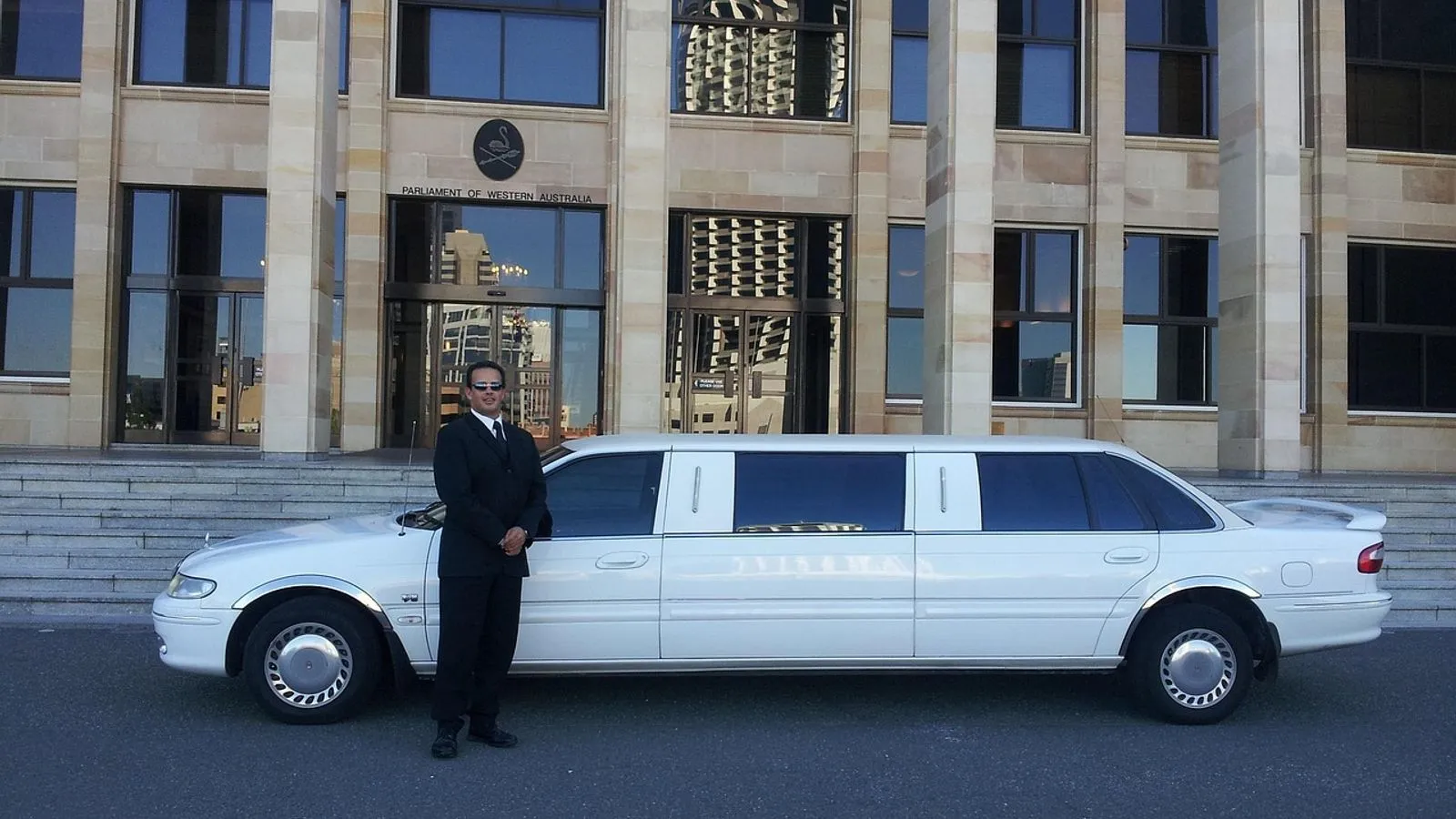
Unlike the airline seating hierarchy, ground transport has no industry-wide standard for the term. Among transfer operators it usually describes a vehicle tier within the fleet: an upper-mid-size or full-size saloon — a Mercedes E-Class or comparable, occasionally an S-Class — rather than a different service model. The driver, flight tracking, the waiting window after landing and the fixed price all work the same way in both tiers. What changes is the car itself: more rear legroom and headroom, a quieter cabin thanks to better sound insulation, often tinted rear windows, power outlets or USB ports, and a driver in business dress. For a passenger who wants to work or take calls en route, that combination — not any single feature — is what the upgrade is actually paying for.
The route-length argument
The single best predictor of whether the upgrade is worth it isn’t the purpose of the trip — it’s distance. Stuttgart to Frankfurt Airport runs about 214 km via the A81 and A5, roughly two hours and seventeen minutes without traffic. On a Stuttgart to Frankfurt Airport transfer, the extra legroom starts to register somewhere past the ninety-minute mark — a quieter cabin and a few more centimetres of knee room genuinely help concentration before a meeting or a long-haul flight. The effect is sharper on the Munich to Frankfurt Airport route: about 391 km via the A3 and A9, close to four hours under good conditions. Anyone covering that distance by road instead of by train — because of bulky luggage, a very early flight, or a cancelled ICE — is in the car long enough for the higher tier to earn its keep. On a fifteen- or twenty-minute hop from Kelsterbach or Raunheim, the same comfort gain barely has time to register before the trip is over.
The optics of picking someone up
A second, often underrated reason to upgrade has nothing to do with your own comfort and everything to do with who’s arriving. If a client, an investor or a visiting executive is being collected at the terminal, the car is doing part of the introducing. A clean saloon and a driver holding a name board at the agreed meeting point on time make an impression before anyone says a word. The order of priorities still matters, though: punctuality and a smooth pickup carry more weight than the badge on the boot — a late driver in the nicest saloon leaves a worse impression than an on-time driver in a solid mid-range car. Companies that book transfers regularly on a corporate account tend to settle this question in their travel policy well before the trip; our piece on chauffeur-driven service in Frankfurt covers how that side of the business works.
The luggage myth
A common assumption is that business class automatically means more boot space. In practice, cargo volume depends far more on body style than on trim level. An upper-mid-size saloon like the E-Class carries around 541 litres — enough for roughly four to five large suitcases, but not categorically more than an economy-tier car of the same body shape. Anyone who genuinely needs more volume — golf bags, ski equipment, or luggage for a family of four — should ask for an estate or a van at booking, not for the “business” tier. That’s a question of body style, not comfort level, and the two can be specified independently when you book.
When economy is genuinely the right call
Not every trip benefits from the upgrade. Short hops from the immediate airport belt — Kelsterbach, Raunheim, Neu-Isenburg, Mörfelden-Walldorf — often run fifteen to twenty-five minutes. Within that window, the higher vehicle tier barely has an effect: the fixed price, the flight tracking and the reliability of the pickup are identical across both tiers, and only the car itself differs. Solo travellers with no need to work en route, price-sensitive bookings, and groups who need a larger vehicle anyway are all better served by the economy tier — it’s the obvious, entirely sufficient choice. The upgrade earns its keep where time in the car, work demands and a client pickup genuinely overlap, not as a default add-on for every booking.
How to decide
Four questions settle it before you pick a vehicle tier at booking:
- How long is the ride? Past roughly two hours in the car, the comfort difference becomes noticeable.
- Are you working during the trip? Calls or laptop work benefit from the quieter cabin.
- Is the car meeting a client or guest? Then the vehicle’s appearance matters independent of distance.
- Is this about space or about comfort? For heavy luggage, body style (estate, van) usually matters more than trim level.
Running through these four questions before booking tends to land you on the tier you actually need — neither underdone nor overkill. The fixed price is calculated per vehicle tier before you commit to anything; the booking page shows exactly what each tier costs for your specific route.
Frequently asked questions
Is a business-class transfer always more expensive than economy?
Vehicle tier is one of several inputs into the fixed price, alongside route, time of day and any extras. The exact difference between tiers depends on the specific route and is shown transparently at booking, before any reservation becomes binding.
How much extra legroom does a business-tier car actually give you?
The difference is usually a few centimetres of rear knee room plus a quieter, better-insulated cabin — noticeable on trips of ninety minutes or more, barely perceptible on short runs of fifteen to twenty minutes.
Will my luggage fit in a business-tier car if I’m travelling with several suitcases?
A business-tier saloon typically holds four to five large suitcases, depending on the model. For larger volumes — sports equipment or luggage for several travellers — an estate or van is the more practical choice regardless of comfort tier, and can be specified separately at booking.
Is the upgrade worth it for a short run like Kelsterbach to Frankfurt Airport?
On trips of fifteen to twenty minutes, the comfort difference barely has time to register, while the fixed price, flight tracking and pickup reliability stay identical across tiers. For runs this short, the economy tier is almost always the sensible choice.
For a long route like Munich to Frankfurt, is it better to drive or take the train?
Both remain independent options: the ICE is usually faster on this route, while a booked car is the more predictable choice with bulky luggage, a very early departure, or train disruption. On a route this long, the business tier pays off through sheer time in the vehicle.