
Accessible transfers to Frankfurt Airport: wheelchairs, walkers and assistance
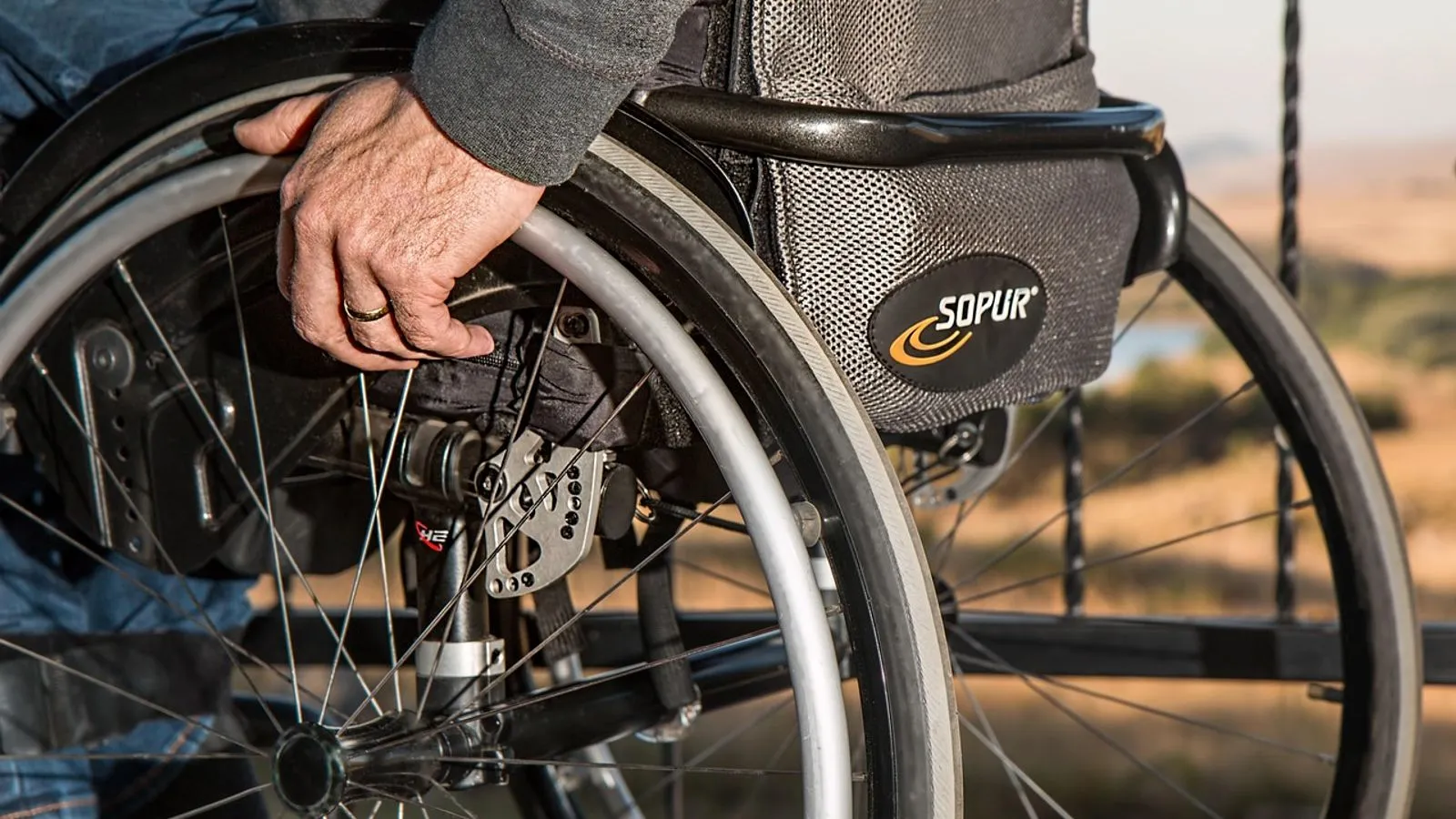
Two separate services get a wheelchair user from their front door to their gate at Frankfurt Airport, and mixing them up is the single most common source of stress on travel day. The accessible transfer covers the drive itself — the vehicle that collects a passenger at home and delivers them to the terminal kerb. What happens after that, from check-in through security to the gate, is handled by the airport’s own mobility service, a completely different organisation with its own registration process. Get both pieces right and the day runs quietly; miss one and the other can’t compensate for it. This guide works through the vehicle side by type of mobility aid, then explains exactly where the airport handoff begins and what the 48-hour rule actually requires.
Wheelchairs in the car: folding, powered, and scooters — what the driver needs to know
Not every wheelchair places the same demands on a vehicle, and that distinction rarely shows up in a standard booking form. A manual folding wheelchair collapses in seconds and fits in the boot of almost any saloon or estate car — the driver simply needs to know it’s coming, so enough boot space is kept free alongside luggage. A powered wheelchair or mobility scooter is a different category entirely: it often weighs over 100 kg, doesn’t fold down, and generally needs either an estate car with a ramp or a purpose-built wheelchair-accessible vehicle with rear access. When booking a transfer for this kind of equipment, the details that actually determine the right vehicle are weight, folded and unfolded dimensions, and battery type — not the number of passengers travelling.
The battery matters beyond the airline’s own checklist. Under the hazardous-goods rules most carriers follow, lithium-ion batteries up to 300 Wh can usually stay installed in the device if they’re fixed in place and protected against short circuit; larger or easily removable batteries often have to travel separately. For the transfer, the practical point is timing: a driver who knows a battery will need to be removed at the terminal can build in enough buffer instead of discovering it on the kerb.
| Mobility aid | Typical vehicle requirement | What the booking needs to state |
|---|---|---|
| Folding wheelchair (manual) | Standard boot space | A note is usually enough; no special vehicle class |
| Powered wheelchair | Estate with ramp or rear-access vehicle | Weight, dimensions, battery type |
| Mobility scooter | Check whether it disassembles | Disassembles yes/no, weight of heaviest part |
| Walking frame / rollator | Boot or back seat, depending on size | Folded size, usually straightforward |
Walkers, canes and other walking aids
Walking frames and canes are usually the least complicated mobility aid to transport, since they fold small and take almost no boot space — but it’s still worth mentioning them at booking so the driver plans a little extra time for getting in and out and offers a hand with stowing the frame. What matters more than the aid itself is often the walking distance: how far does the passenger need to walk from the car to the terminal door, and is there somewhere to sit briefly once inside? A good driver pulls up as close to the terminal entrance as the airport allows, rather than defaulting to a distant drop-off zone, and helps with a luggage trolley to the door if needed. On a very early departure, when the terminal is still quiet, that short walk is a genuinely calm part of the trip rather than a rush.
The handoff to the airport: PRM registration and the FRA mobility service
Once the car reaches the terminal, the transfer operator’s job ends and the airport’s begins — and this is where most misunderstandings happen. Assistance for passengers with reduced mobility, referred to in the industry as PRM service, is organised at Frankfurt Airport by FraCareServices GmbH, a joint venture between Fraport and Lufthansa. This assistance cannot be booked directly with the airport; it has to be arranged through the airline or travel agent that issued the ticket.
EU Regulation 1107/2006 sets the rule across Europe: anyone who needs assistance should notify the airline, tour operator or booking agent at least 48 hours before the published departure time, free of charge, regardless of where the booking was made. Whoever receives that notification is required to pass it on to the airport at least 36 hours before departure, so an assistance team can be scheduled. If notice arrives late, or not at all, Article 7(3) of the regulation still obliges the airport to make all reasonable efforts to get the passenger onto their booked flight — a safety net worth knowing about, but not one to rely on when there’s enough lead time to do it properly.
For the transfer, that split works out cleanly in practice: the driver brings the passenger to the terminal, and from there the airport’s assistance team takes over with a wheelchair or electric buggy through check-in, security and to the gate. Handling both registrations separately but early — the transfer booking and the airline’s 48-hour notice — is what makes both ends of the journey run without a scramble.
Travelling companions and assistance dogs
A travelling companion normally rides in the same vehicle and only needs to be counted as an extra seat when booking — though with a larger family or several companions, that headcount can determine the vehicle class on its own, much like planning a group transfer. The rule of thumb is to name every passenger at booking so enough seats and luggage space are reserved from the start.
Assistance dogs sit in a clearly different category from ordinary pets. A professionally trained and certified assistance dog — a guide dog or hearing dog, for example — can generally travel in the cabin free of charge and, with many airlines, isn’t held to the usual cabin weight limits that apply to pets. Emotional support animals without that formal training don’t qualify for this exception at most carriers and are treated as standard pets instead. For the car journey itself, a registered assistance dog simply travels at its handler’s feet, with no carrier required — notifying the transfer operator is mainly so the vehicle and driver are prepared, not because approval is needed. Travellers bringing an ordinary pet alongside will find more detail in the guide to travelling with a dog or cat in a transfer vehicle.
Booking an accessible transfer correctly
The underlying rule is simple: the more specific the booking, the more reliably the right vehicle turns up on the day. That means stating the mobility aid and its type, whether it needs to be disassembled, how many companions are travelling, and whether an assistance dog is coming along. Flight number and terminal matter just as much, so the driver can track the arrival or departure time and build in enough buffer for a slower boarding and unloading process — the general guide to booking an airport transfer covers what a solid booking needs beyond accessibility specifically. At pickup, it helps if the driver waits visibly at the agreed meeting point, the same principle behind a name-board pickup — particularly when the goal is to keep the walk from car to terminal door as short as possible. All of this can be entered directly when calculating a fixed price, so it shapes the vehicle assignment from the start rather than being sorted out on the kerb.
Frequently asked questions
How do I register for mobility assistance on a flight from Frankfurt?
Registration goes through the airline, tour operator or booking agent for the flight, at least 48 hours before the published departure time, and it’s always free of charge. The airport itself can’t take this registration directly — it depends on the airline passing the request along.
What happens if I miss the 48-hour deadline?
Under EU Regulation 1107/2006, the airport is still required to make all reasonable efforts to arrange assistance so the passenger can catch their booked flight. Early registration remains the more reliable route, especially during busy periods.
Does a powered wheelchair need a special vehicle for the transfer?
A powered wheelchair often weighs over 100 kg and doesn’t fold, so an estate car with a ramp or a rear-access vehicle is usually the safer choice. Weight, dimensions and battery type are what actually determine the correct vehicle assignment, and should be stated at booking.
Can an assistance dog travel in the transfer vehicle?
A professionally trained assistance dog travels at its handler’s feet in the vehicle, with no carrier needed. Notifying the transfer operator in advance is about preparing the vehicle and driver, not seeking approval.
Does the transfer operator also provide assistance inside the terminal?
No, the transfer operator’s responsibility ends at the terminal kerb. From that point, the airport’s own mobility service takes over, activated through the 48-hour notice given to the airline, and stays with the passenger through to the gate.