Taxi rank or pre-booked car at Frankfurt Airport: an honest comparison
Three travellers face the same question on the same Monday morning: how do I get to Frankfurt Airport taxi or should I book ahead? A physiotherapist in Frankfurt’s Nordend district has twenty minutes to reach the station for a connecting train. A sales director in Würzburg needs to be at the terminal by 6 a.m., before any local taxi firm in his town has even started its shift. A family with two kids, three suitcases and a child seat is heading out on a package holiday. All three solve the trip differently — and all three are right to. Here’s why.
Case one: the short, spontaneous ride
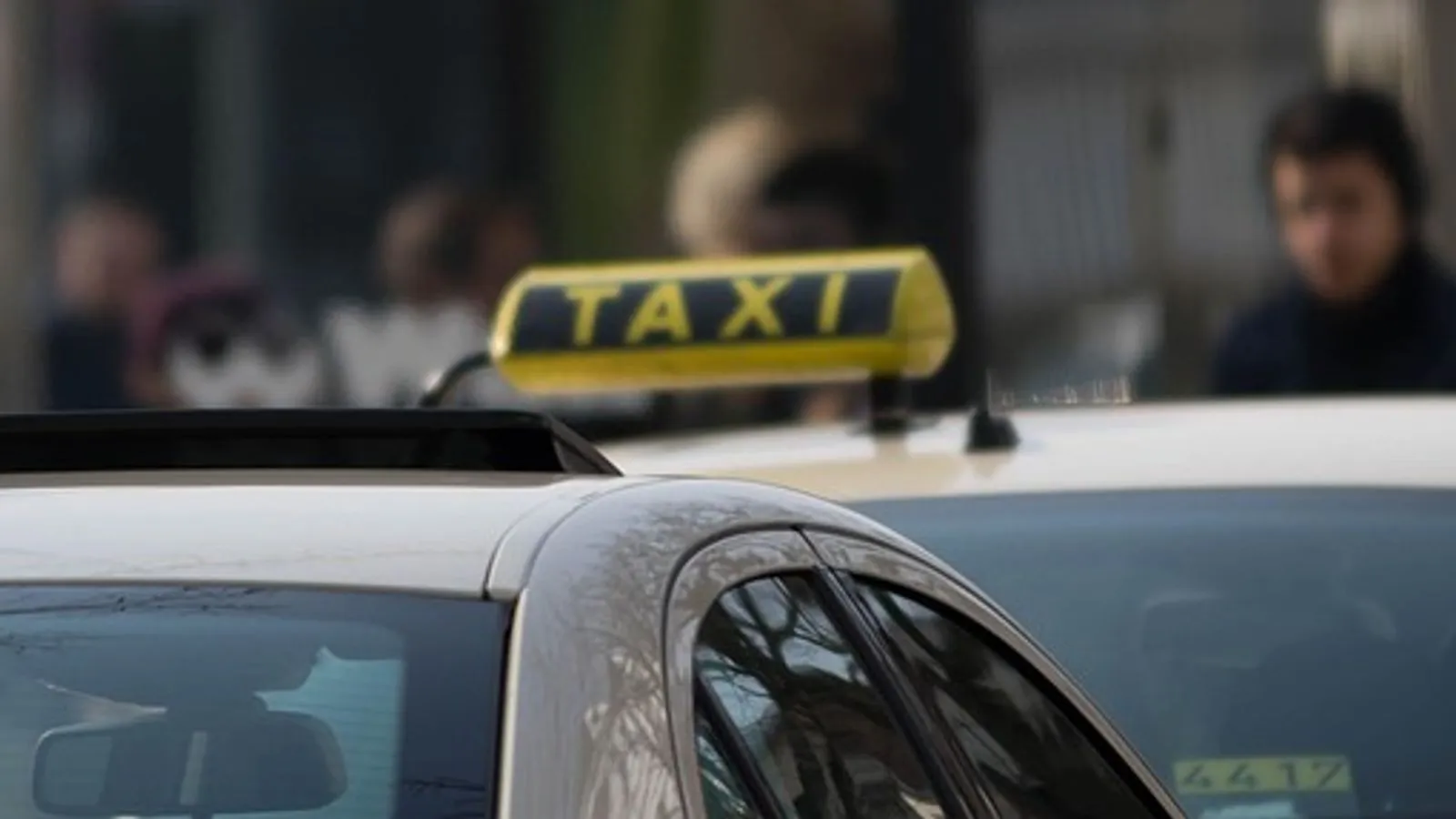
The physiotherapist doesn’t need to plan ahead. She walks outside, hails a cab or opens an app, and within a few minutes a car is usually available. For short runs within Frankfurt or the immediate surrounding area, this beats any pre-booking — there’s no confirmation lag to wait through.
Pricing runs on the standard meter. Frankfurt’s official taxi tariff sets a base fare of €4.00 plus €2.40 per kilometre driven, with no night surcharge — day and night rates are identical. Groups larger than four pay an additional surcharge. The risk with this option: a jam on the A5 or a diversion around roadworks feeds straight into the meter. Over a ten- or fifteen-minute ride, that risk is small. Over a longer haul, it can add up.
Since December 2024, Frankfurt taxi operators have also been allowed to offer pre-agreed fixed fares, arranged by phone or app before the ride starts. These fixed fares sit within a regulated corridor of €2.40 to €4.00 per kilometre and drop the separate base fare altogether — a middle ground between the classic meter and a full pre-booking with a transfer company. It’s worth asking for if you want price certainty without giving up spontaneity, provided the operator offers it.
Case two: the early departure with no local network
The sales director from Würzburg has a different problem: at four in the morning, no local taxi company reliably answers the phone, and even if one does, there’s a residual risk at the terminal end — does the car actually show up, did the driver get the address right, what happens if there’s a last-minute cancellation. On a trip well over 100 kilometres to the airport, he doesn’t want to carry that risk on departure day.
For him, a pre-booked ride with flight tracking is the obvious answer — but tracking works in reverse for departures. Instead of monitoring a landing, the operator calculates his pickup time backwards from his departure time, building in a buffer for security and check-in. The price is locked in at booking, regardless of whether the A3 is clear that morning or backed up for miles. That’s the core difference from a metered ride: on a long route, the fare risk shifts from the passenger to the operator.
More on how this timing works for very early departures is in the article on catching early flights from FRA.
Case three: luggage, a child seat, a predictable process
The family isn’t racing a clock or a long distance — their issue is equipment. A child seat needs to be present and correctly fitted, the boot needs to swallow three large suitcases plus hand luggage, and ideally nobody is scrambling to rearrange bags at a busy taxi lane in broad daylight. None of that is reliably plannable at a taxi rank, where the next available car pulls up — not necessarily the one with the right seat installed.
With a pre-booking, vehicle class and equipment are locked in at the time of booking. That removes a variable on departure day that matters more to a family of four than the fare itself: whether there’s actually going to be enough room.
Where the taxis actually stand
Since Terminal 3 opened on 23 April 2026 and the full relocation of every airline previously based at Terminal 2 was completed by 9 June 2026, Frankfurt Airport now runs two passenger terminals: Terminal 1 and Terminal 3. Taxis wait at both, clearly signed on the arrivals level right outside baggage claim. The extended SkyLine people mover links the two terminals for free, around the clock, with a roughly eight-minute ride and departures every two to three minutes — relevant if you land at one terminal and need picking up at the other. More on the new terminal layout is in the piece on Terminal 2’s closure.
One practical difference between the rank and a pre-booking sits right here: at the rank, you queue until a car frees up — during peak periods or major trade fairs that can mean ten to twenty minutes. With a pre-booked pickup, the driver is already waiting with a name board at the agreed meeting point once the aircraft has landed plus a buffer for baggage claim and customs.
The decision, side by side
| Factor | Taxi rank / meter | Pre-booked / fixed fare |
|---|---|---|
| Wait before departure | usually a few minutes | requires advance booking |
| Fare risk from traffic/diversions | carried by the passenger | carried by the operator |
| Best suited to | short, in-city trips | mid-length to long, plannable trips |
| Very early or overnight departures | depends on local availability | bookable regardless of time |
| Child seat / special equipment | not guaranteed | fixed at booking |
| Business-trip invoicing | receipt, limited upfront detail | invoice with cost details planned in advance |
What actually tips the decision
As a rule of thumb: the shorter the trip, the more spontaneous the decision, and the lower the personal cost of a delay, the more the taxi rank or a taxi app makes sense. The longer the route, the tighter the connection to a flight, the more luggage or special equipment is involved, and the more a locked-in fixed fare matters, the more a pre-booking earns its keep. Both systems exist side by side because they solve different problems — neither one is categorically better.
If you land on pre-booking, you can work out the fixed fare for your own route and pick the vehicle class in the same step — more on the booking page.
Frequently asked questions
How much does a taxi from Frankfurt Airport into the city centre cost?
Under the standard meter, the fare follows Frankfurt’s official base rate plus a per-kilometre charge, applied identically day or night since there’s no night surcharge. For a fixed fare arranged in advance, the amount can be checked directly through a booking request before the trip starts.
Do I have to queue at a taxi rank at Frankfurt Airport?
Both terminals — Terminal 1 and the Terminal 3 that opened in April 2026 — have clearly signed taxi ranks on the arrivals level right at baggage claim, where a queue can build up during busy periods. A pre-booked pickup skips that wait entirely, since the driver is already positioned at the agreed meeting point.
Is a pre-booked transfer more expensive than a rank taxi?
Not automatically — on short trips the rank is often cheaper, while on longer routes the gap frequently narrows or reverses, because a fixed fare doesn’t pass traffic or diversion risk on to the passenger. A direct comparison is most worthwhile once the ride is roughly thirty minutes or longer.
Can I get a proper invoice for a business trip taxi ride to the airport?
Taxi operators issue a receipt or invoice on request, though usually with less upfront clarity on the final amount than a pre-booked ride offers. Anyone who needs an invoice with clear cost-centre detail for expense reporting is generally better served by booking in advance.
What happens if my flight is delayed and I’ve pre-booked a pickup?
A pre-booked pickup is typically monitored through flight tracking, so the pickup time adjusts automatically to a delay without the passenger needing to notify anyone. A rank taxi has no such mechanism — there, what matters is simply when the passenger walks out of the terminal.