Hochheim am Main: a wine town with two traffic peaks a year
Hochheim am Main is one of the few places in the Rhine-Main region whose name made it into the English language: “Hochheim” became “Hock”, still the British collective term for Rheingau wines. Anyone calling a taxi in Hochheim or booking an airport transfer soon finds that viticulture shapes more than the landscape here — it shapes the traffic calendar too, and on the two dates when the town is fullest, a fixed pickup time is worth the most.
A town on the terrace
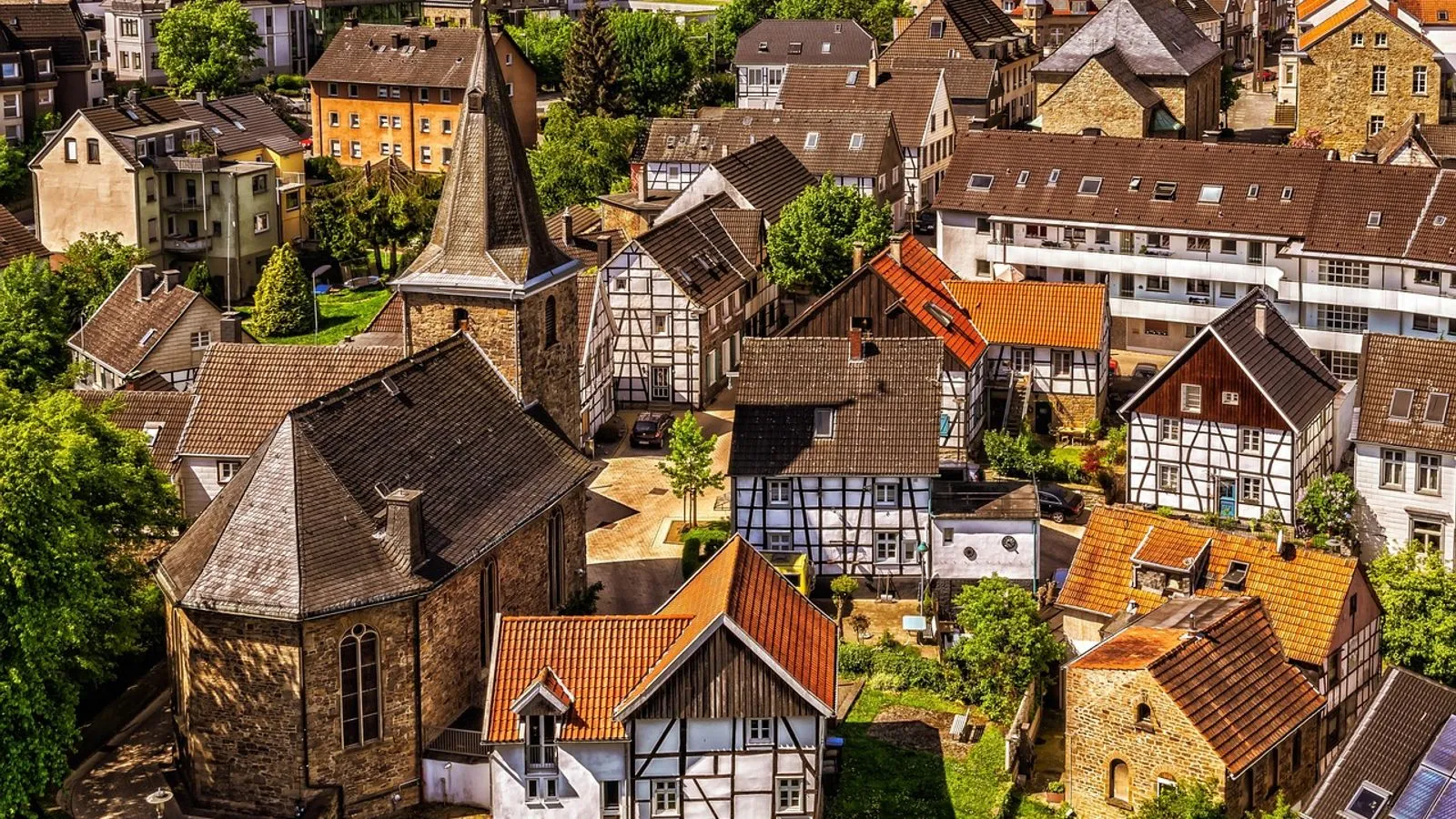
Hochheim am Main has 18,425 residents (as of 31 December 2025) and belongs to the Main-Taunus district. The municipality divides into the historic centre, the Südstadt that grew up around the station, and the Massenheim district, incorporated on 1 January 1977 and home to around 2,000 people today. The centre sits roughly 35 metres above the Main floodplain — a terrace position that turns the vineyards to face south and explains why the place looks so different from its flat neighbours.
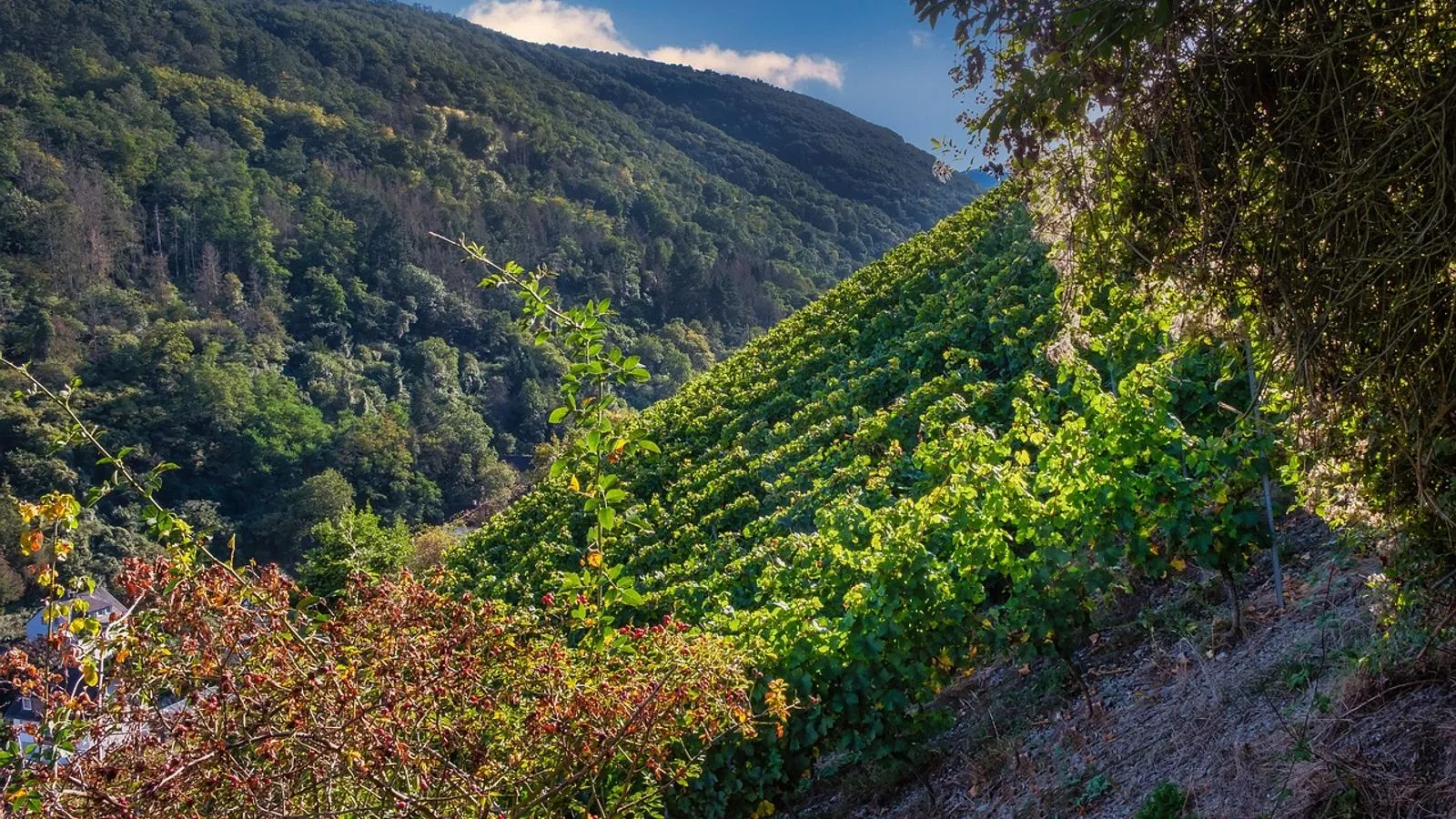
Hofheim am Taunus lies to the north, Flörsheim am Main to the east, and across the Main to the west are districts of Wiesbaden. Winegrowing here is an industry rather than folklore: 241 hectares of vines belong to the Rheingau appellation, 80 per cent of them planted with Riesling. Well-known sites include Domdechaney, Kirchenstück, Stielweg and the Königin-Viktoria-Berg — named after the British queen’s visit in 1845, from which the English term “Hock” developed.
| Detail | Hochheim am Main |
|---|---|
| District | Main-Taunus-Kreis |
| Population | 18,425 (as of 31 December 2025) |
| Distance to the airport | 19 km |
| Drive time to the terminal | approx. 19 minutes |
| Town districts | Centre, Südstadt, Massenheim |
| Vineyards | 241 ha Rheingau, 80% Riesling |
The drive: the B40, the A671 and a river in between
From the centre to the terminals is 19 kilometres and around 19 minutes of driving. The roads that carry it are the B40, which runs east to west through the area, and the A671 along its western edge, which provides the motorway connection. As with the neighbouring towns, the airport is not on the same side of the Main, so every trip involves a crossing.
In practice that means what it means upstream: the drive time is forgiving as long as nothing jams, but it reacts sharply to a single bottleneck. Travelling at the usual morning or late-afternoon peaks deserves a more generous lead time — the guide figure is to be at the terminal around two hours before a Schengen departure and about three for long-haul.
Two dates when the calculation changes
Hochheim has two traffic peaks that its neighbours do not share.
The first is the Hochheimer Markt, held since 1484, running in early November and drawing close to 500,000 visitors — into a town of just over 18,000 people. During that week the approach roads, the parking and the local vehicle supply are all noticeably committed. Anyone who has to catch a flight in market week should fix the pickup well in advance rather than arrange it on the day.
The second is the wine season with its festivals and tastings. It spreads across the year but follows the same pattern: plenty of guests who would rather not drive that evening, and a local supply that is fully booked on those nights. For travellers heading to the airport the next morning, that is the classic case where a pre-booked fixed pickup makes the difference.
The S1 does not call at the airport
Hochheim sits on the S1 line linking Wiesbaden via Frankfurt to Rödermark-Ober-Roden, and since December 2018 the RE 4 and RE 14 regional express services have called here too. For commuting to Frankfurt or Wiesbaden the connection is good.
For an airport run, though, the same limitation applies as in Flörsheim: the S1 does not go via the airport. Reaching the terminal by train means a change — with a suitcase, a platform switch and connection risk. Unlike Rüsselsheim, where the S8 and S9 serve the airport’s regional station directly, the train here is not an equivalent substitute for a through journey.
Tariff, the mandatory zone, and the boundary to the west
Hardly anywhere in the Main-Taunus district sits as close to a tariff edge as Hochheim. The town belongs to the mandatory service area of Frankfurt’s taxis, where the official tariff is binding — but Rhineland-Palatinate begins immediately to the west, and Frankfurt’s tariff expressly excludes its transport region.
A run to the airport is untouched by that; it heads east. The edge shows up in everything going the other way: beyond the mandatory area the tariff requires the price to be negotiated before departure instead of letting the meter decide. For wine travellers heading on to the Rheingau or Mainz after landing, that is the point where an amount agreed in advance makes planning considerably simpler. The reasoning behind it is in our piece on fixed-fare taxis at Frankfurt Airport.
Who travels to the airport from here
The passenger mix blends industry and wine:
- Business travellers from Tetra Pak, whose German headquarters has been in Hochheim since 1965, and from the surrounding business parks — needing a receipt settled before the trip.
- Wine estates and their guests, having customers, merchants and trade visitors collected from the airport, where the welcome with a name sign matters more than the drive time.
- Holiday travellers on early flights, for whom the first S-Bahn is too late or the change with luggage is impractical.
- Older travellers, for whom the real gain is the walk from the front door into the car and from the car to the departures level.
Booking: what makes the difference
Two Hochheim specifics belong in the booking. The first is the district: Massenheim sits apart from the core town, and anyone being collected there should say so rather than just entering the town name. The second concerns the wine estates — many sit on farm tracks or have a yard entrance that is not the same as the postal address. A sentence in the notes field saves the driver the search and you the phone call.
Everything else is as it is anywhere: give the flight number so the pickup follows the real landing time, and read up on where the driver waits beforehand. The route itself, with drive time and a fixed price, is on the Hochheim am Main airport transfer page.
Frequently asked questions
How far is Hochheim am Main from Frankfurt Airport?
The route is 19 kilometres with around 19 minutes of driving, via the B40 and the A671 including a crossing of the Main. At the morning and late-afternoon peaks an additional buffer is worth planning in.
Does the S-Bahn run from Hochheim straight to the airport?
The S1 serves Hochheim but does not stop at the airport, so a train journey to the terminal requires at least one change. The RE 4 and RE 14 regional express lines have also called here since December 2018.
What does the Hochheimer Markt mean for getting to the airport?
The market has run since 1484, takes place in early November and draws close to 500,000 visitors into a town of just over 18,000, so approach roads and local vehicles are heavily committed that week. A pickup time fixed in advance is then far more reliable than a booking made on the day.
Why are Rheingau wines called “Hock” in English?
The term derives from Hochheim and spread after Queen Victoria’s visit in 1845, still commemorated by the Königin-Viktoria-Berg vineyard. “Hock” has stood for Rheingau wines in English ever since.
Does the same taxi tariff apply on a trip from Hochheim to Mainz?
Rhineland-Palatinate is not part of Frankfurt’s mandatory service area, and the state line runs immediately west of Hochheim. For such legs the tariff requires the price to be negotiated before departure, which is why an amount agreed in advance is the more reliable basis here.