Flörsheim: the airport is opposite, the drive goes around
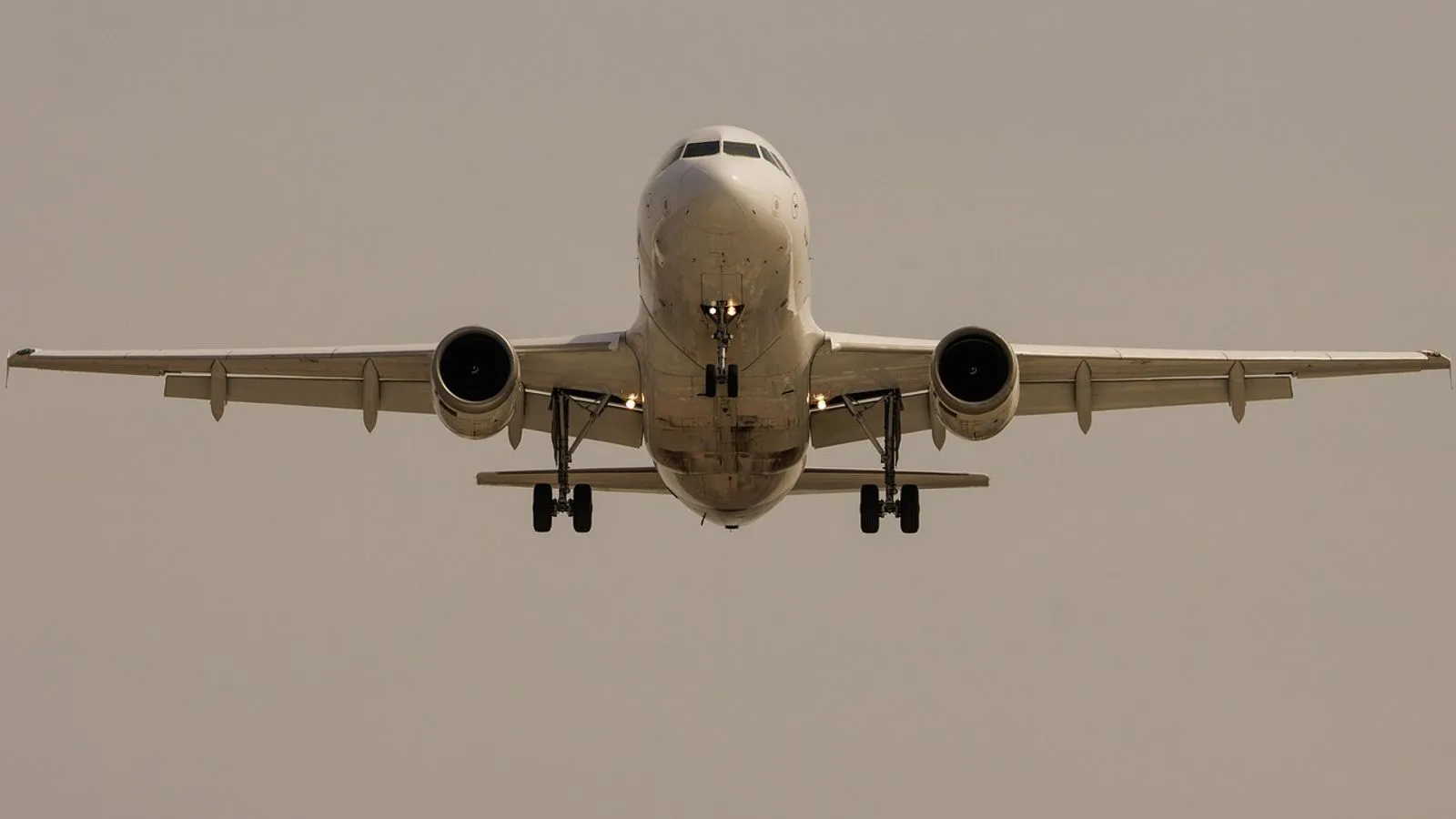
Few places have as peculiar a relationship with Frankfurt Airport as Flörsheim am Main. The terminals sit on the other side of the Main, close enough to feel within sight, and three of the four approach and departure routes pass over inhabited parts of the town — the airport is an audible presence here every day. What you cannot do is drive straight to it. Anyone calling a taxi in Flörsheim or booking an airport transfer travels a route considerably longer than a glance across the river suggests.
A town the river divides from its airport
Flörsheim am Main has 21,257 residents (as of 31 December 2025) and belongs to the Main-Taunus district. The town is made up of four parts today: the centre, Weilbach, Wicker and the Keramag/Falkenberg area. Weilbach and Wicker were independent municipalities until 31 December 1971, joining during Hesse’s local-government reform — a detail that still matters day to day, because the run from Wicker or Weilbach to the main road adds a few minutes compared with the centre.
Geographically Flörsheim sits in the middle of the Rhine-Main triangle between Frankfurt, Wiesbaden and Mainz, on the opposite bank of the Main from the airport. That position shaped the town long before there was an airport: from 1765 to 1914 a faience manufactory produced here, and its three “F” marks still appear in the municipal coat of arms. Among today’s employers is BB Services, the company behind the BlueBrixx building-brick brand.
| Detail | Flörsheim am Main |
|---|---|
| District | Main-Taunus-Kreis |
| Population | 21,257 (as of 31 December 2025) |
| Distance to the airport | 14 km |
| Drive time to the terminal | approx. 16 minutes |
| Town districts | Centre, Weilbach, Wicker, Keramag/Falkenberg |
| Rail | S1 (does not serve the airport) |
Why the straight line misleads
The airport lies to the east, beyond the Main — and that is exactly where the short version of the journey ends. There is no direct crossing between Flörsheim and the terminals, so every trip runs via the nearest bridge and from there onto the roads that follow the southern bank. In our routing dataset that comes to 14 kilometres and roughly 16 minutes of driving, mostly on the A3 and the B43.
That sounds unremarkable, but it has a practical consequence: drive time here depends more than usual on a single bottleneck. If the crossing is busy or the A3 is sluggish in rush hour, it shows up in full, because there is no equivalent alternative route towards the airport. Travelling between seven and nine in the morning or four and seven in the afternoon deserves a more generous plan than the satnav offers — whether you drive yourself, call a taxi or book a transfer.
The S1 does not stop at the airport
Flörsheim sits on the Taunus railway, one of the region’s oldest lines, and is served every half hour by the S1 — towards Wiesbaden in one direction and Frankfurt, Offenbach and Rödermark-Ober-Roden in the other. For commuters that is comfortable. For an airport run it is the decisive catch: the S1 does not call at the airport. Reaching the terminal by train means changing, and a single journey with a suitcase becomes two, with stairs, a platform change and connection risk.
That sets Flörsheim clearly apart from places like Rüsselsheim across the Main, where the S8 and S9 serve the airport’s regional station directly. There the train is a genuine competitor; in Flörsheim it is an option with a change — which is what tips the balance on early flights, with heavy luggage, or travelling with children.
On the edge of the mandatory taxi zone — and what that means
Taxi journeys in Flörsheim run on Frankfurt’s official tariff: the town sits inside the mandatory service area, whose western limit the tariff draws at Wiesbaden. In practice that means the amount for a run to the terminal is not negotiable — it comes from the tariff and the meter.
It gets interesting one town further on. The tariff expressly excludes the part of the region belonging to Rhineland-Palatinate, and from Flörsheim that begins after only a few kilometres. Onward trips into the Rheingau, to Mainz or further south therefore fall under a different rule: there the price has to be negotiated before departure rather than emerging from the meter. Anyone planning such a leg is better served by an amount agreed in advance — the reasoning behind it is in our piece on fixed-fare taxis at Frankfurt Airport.
Who actually travels this route
The passenger mix in Flörsheim differs noticeably from a purely residential town further out:
- Airport staff on shifts, whose workplace is in sight but whose commute takes the long way round — often at hours with no public transport at all.
- Holiday travellers on early flights who need to be at the terminal before six, for whom a change with luggage in the dark is not an option.
- Business travellers from the Main-Taunus district who need a predictable receipt rather than a fluctuating meter total.
- Visitors and guests being collected at the terminal, where what counts is that somebody is waiting with a name sign rather than the guest having to work out a connection.
Two dates also turn the town itself into a destination: the Verlobter Tag, which Flörsheim has observed since 1666 in thanks for the end of the plague and still marks on the last Monday in August, and its carnival, which draws around 80,000 visitors. On days like those, a fixed pickup at your own address is worth more than hoping for a free car.
Taxi from the rank, or a transfer at a fixed price?
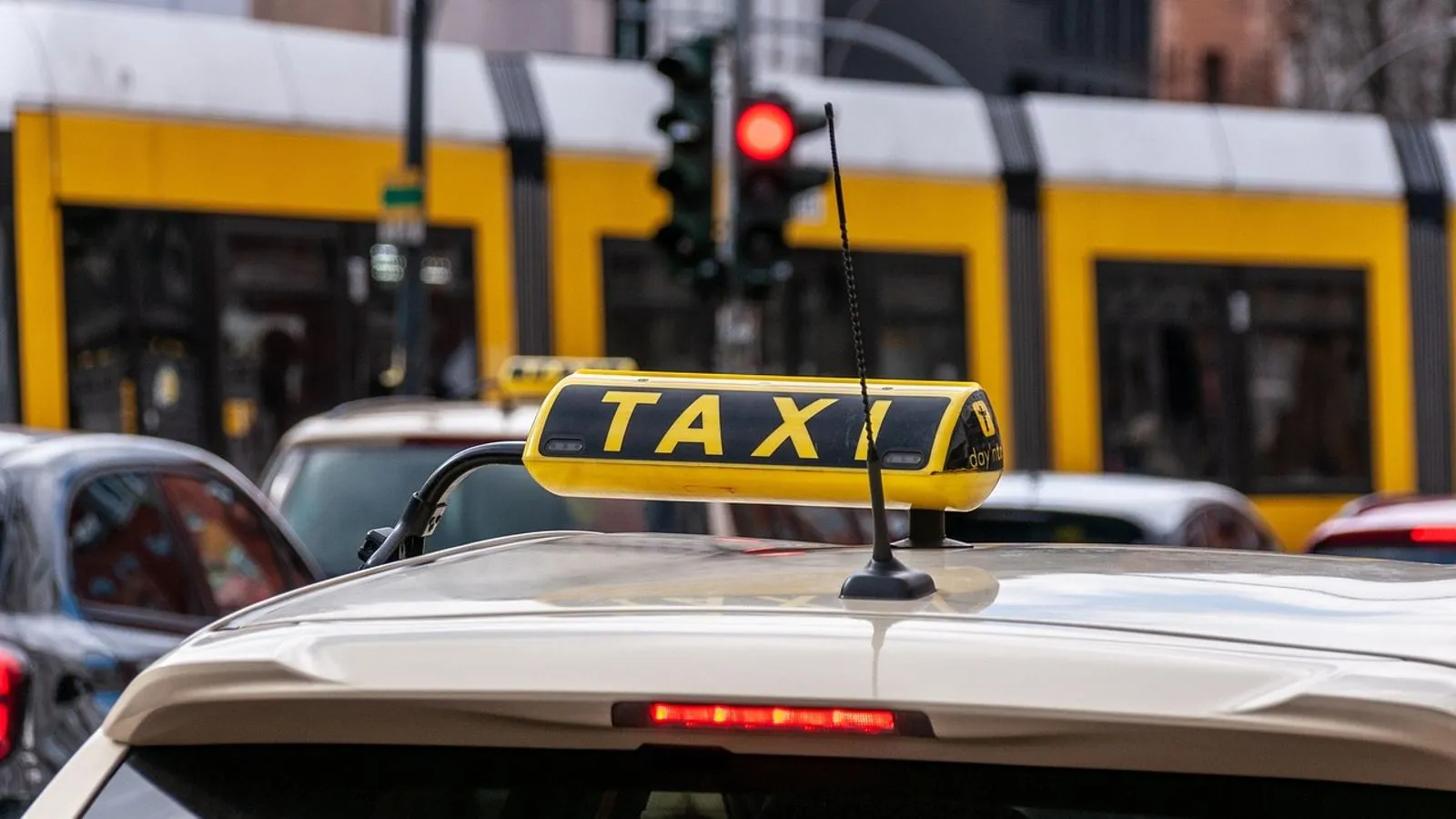
For a spontaneous trip inside the mandatory area, a taxi is the simplest answer — no lead time, no booking, and within the area there is a duty to accept the fare. That works best in daylight and over short distances.
As soon as a fixed time enters the picture, the advantage shifts. For a 06:30 departure what matters is not what the ride costs but that a car is genuinely at the door at 04:15. And on the return leg, a pre-booked transfer’s pickup follows the actual landing time rather than the schedule — if the flight is late, the meeting point moves automatically, with no call and no rebooking.
One local detail belongs in every booking here: name the district. Wicker, Weilbach and the Keramag area sit off the main axis, and the few extra minutes a driver needs to reach them decide the rest of the morning when the pickup is at quarter past four. If you want to know where the driver waits, our guide to pickup at Terminal 1 and Terminal 3 has it; the route itself, with drive time and a fixed price, is on the Flörsheim am Main airport transfer page. For how the same calculation looks next door, see our pieces on Hochheim am Main and Rüsselsheim.
Frequently asked questions
How far is Flörsheim from Frankfurt Airport?
The route is 14 kilometres with around 16 minutes of driving, even though the airport is considerably closer as the crow flies — the Main lies between the town and the terminals, and the journey runs via the nearest crossing onto the roads along the southern bank.
Does the S-Bahn run from Flörsheim straight to the airport?
The S1 serves Flörsheim every half hour but does not stop at the airport, so reaching the terminal by train requires at least one change. With luggage and on early flights, that is the practical drawback compared with a direct ride.
Is Flörsheim inside Frankfurt’s mandatory taxi service area?
The town sits inside the mandatory area, whose western limit Frankfurt’s taxi tariff draws at Wiesbaden, so the official tariff governs runs to the terminal. What is not included is the Rhineland-Palatinate part of the region, which from Flörsheim begins after only a few kilometres.
Why is aircraft noise so present in Flörsheim when the drive is so long?
Three of the four approach and departure routes pass over inhabited parts of the town, so the airport belongs to it acoustically. By road, though, the Main separates them, and with no direct crossing between Flörsheim and the airport grounds, the driving distance is a multiple of the straight line.
Is pre-booking worth it over such a short distance?
It pays off precisely where pickup times are fixed — before early shifts or early flights — because the collection time is settled and the price stays independent of traffic and waiting. On arrivals, the actual landing time is used rather than the scheduled one.