Rüsselsheim: where the S-Bahn is genuinely the rival
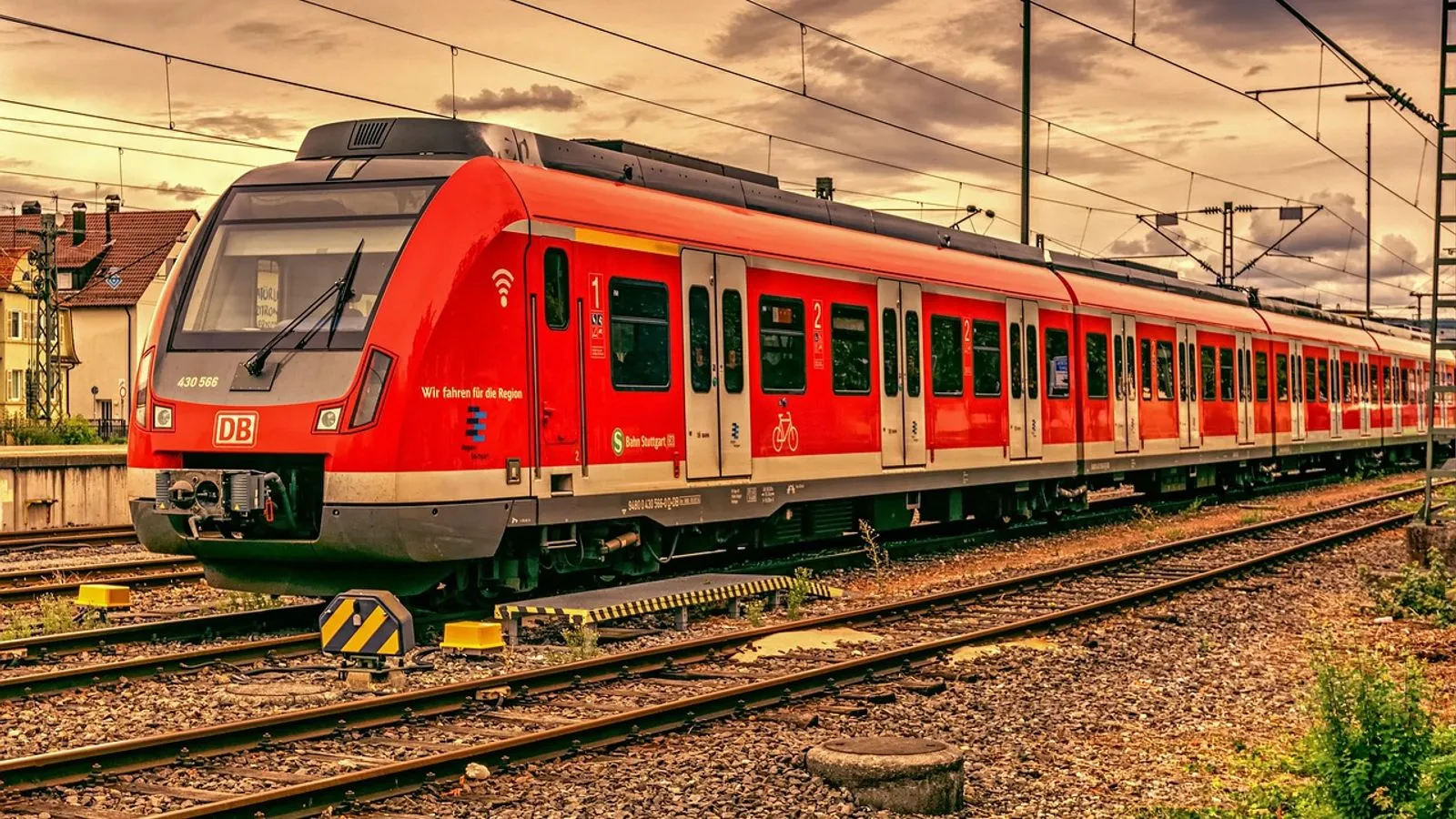
Most writing about airport journeys pretends there is no alternative to a car. In Rüsselsheim am Main that would simply be untrue: the S8 and S9 stop here and run every fifteen minutes straight to the airport’s regional station. So anyone looking for a taxi in Rüsselsheim or an airport transfer should first know when the train is the better answer — and in which cases it is not.
The city Opel built
Rüsselsheim am Main has 66,028 residents (as of 31 December 2025), making it the largest town in the Groß-Gerau district. It consists of the core city in the north plus three incorporated districts: Haßloch joined in 1951 (then around 737 residents), Königstädten in 1956 (around 2,537) and Bauschheim in 1970 (around 2,874). Since 2015 the town has officially carried the suffix “am Main”.
Its industrial history begins in 1862, when Adam Opel started making sewing machines in a former cow stall. The business became a carmaker that by 1928 was building 43,000 vehicles a year and employing 9,400 people. That legacy is still visible — not least in the fact that the plant has its own S-Bahn stop. For the era before it: the Festung Rüsselsheim, developed from a medieval castle into a square fortress between 1530 and 1540 and razed by French troops in 1689, has housed the city museum since 1976.
| Detail | Rüsselsheim am Main |
|---|---|
| District | Groß-Gerau |
| Population | 66,028 (as of 31 December 2025) |
| Distance to the airport | 15 km |
| Drive time to the terminal | approx. 19 minutes |
| Town districts | Core city, Haßloch, Königstädten, Bauschheim |
| Rail | S8 and S9, direct to the airport |
To the south the municipal area borders the airport grounds directly. Across the Main to the north lie Hochheim and Flörsheim; Raunheim and Mörfelden-Walldorf adjoin to the east.
When the train wins — and it often does
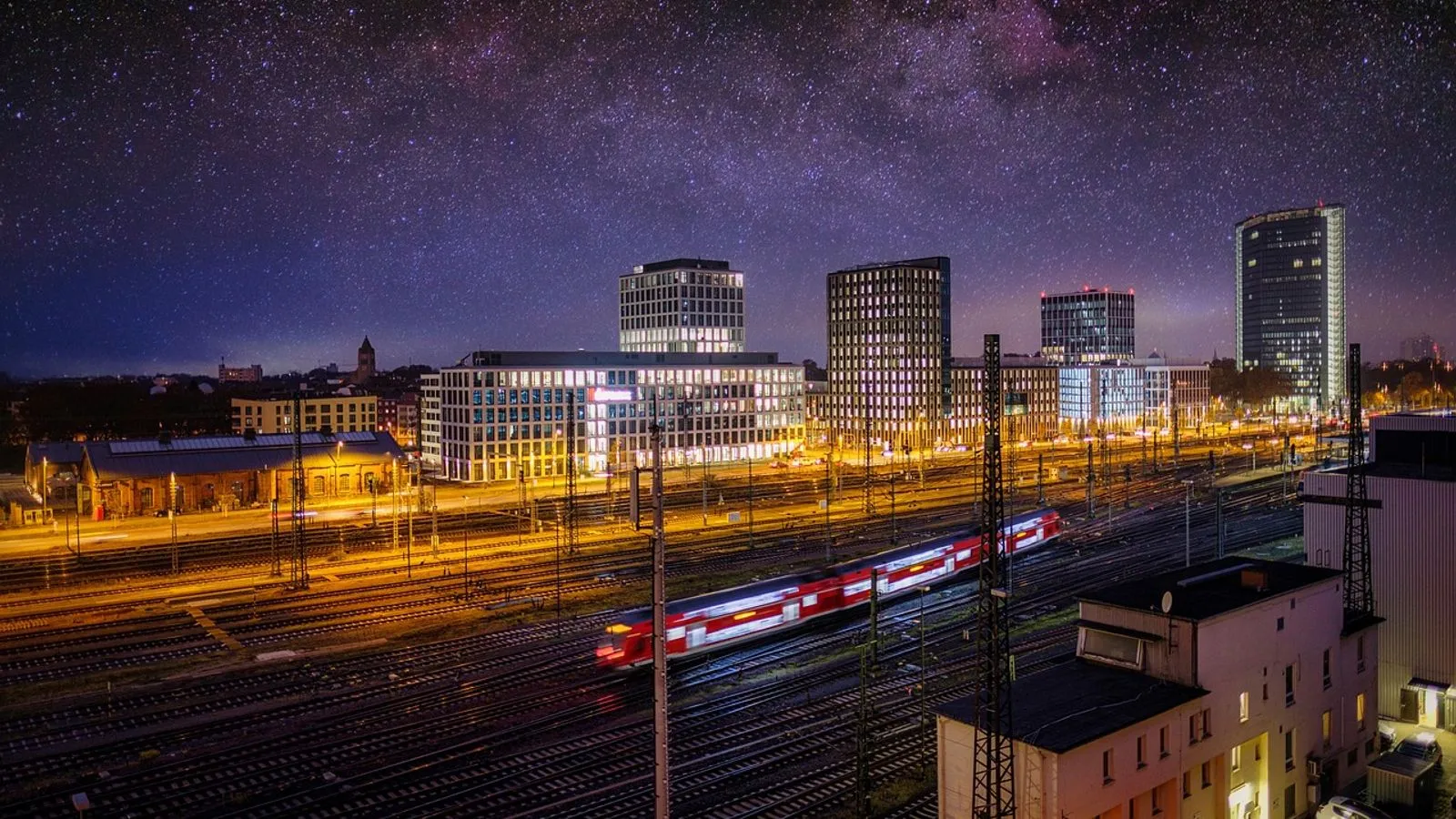
Two stations sit within the town: Rüsselsheim and Rüsselsheim-Opelwerk, both on the Mainz–Frankfurt line. The S8 and S9 link them every fifteen minutes with Wiesbaden, Mainz, Frankfurt — and with the airport. For one person with hand luggage travelling from the core city in daylight, that is hard to beat: no hunting for a parking space, no queue on the approach road, and a timetable you can plan around.
We say so plainly, because the alternative — selling a transfer to everybody who searches — is worse for both sides. A transfer earns its place where predictability, luggage or the hour are worth something. Where they are not, take the S-Bahn.
When it does not
Four situations recur, and in all four the fifteen-minute service does not help:
- The edges of the day. Many long-haul flights land early in the morning and many holiday flights leave before six. That is exactly when the service thins out, and a comfortable connection turns into a long wait on an empty platform.
- The districts with no station. Haßloch, Königstädten and Bauschheim are not on the line. Living there means a journey to the station before the train journey — with luggage, two changes instead of none.
- Luggage and groups. Two large cases, a child seat or four travellers change the calculation entirely. A transfer’s price is for the vehicle rather than per person, so the cost per head falls with every extra passenger.
- The receipt. On a business trip, an amount that is settled before departure and can be approved is worth more than a ticket plus a meter printout.
Shift work, the plant and the university
Rüsselsheim’s passenger mix is unusually broad. There is airport staff on shifts starting or finishing at hours when public transport is thinned out. There are employees at the plant and in the surrounding industrial estates, for whom the airport is less a destination than a neighbour. And there is Hochschule RheinMain, whose campus lies within the town: students and visiting academics arrive internationally, often with a lot of luggage and rarely at office-friendly hours.
That is also why night journeys are routine here. Even when nothing is scheduled to take off or land in the core night hours, work on the ground carries on — cleaning, maintenance, preparing the first early departures. The people doing it need a ride at three in the morning, and a fifteen-minute service does not help them at that hour.
Tariff and the mandatory service area
Rüsselsheim belongs to the mandatory service area of Frankfurt’s taxis — the zone where the official tariff is binding and a fare cannot be negotiated up or down. For a run to the airport, that is the simple case.
The exception lies west: Mainz counts as Rhineland-Palatinate transport territory and does not belong to the area, even though it is nearer than some Hessian destinations. Anyone continuing there after landing falls under the rule for journeys beyond the zone, where the tariff demands a price agreed before departure. How the Frankfurt system is put together is explained in our piece on fixed-fare taxis at Frankfurt Airport.
When you book: what counts
In Rüsselsheim one entry matters above all: the district. A pickup in Bauschheim, Königstädten or Haßloch starts from a different point than one in the core city, and on a half-past-four run that decides the departure time. On the plant site and in the adjoining industrial estates, add the gate or unit number — addresses there can sit several hundred metres from the access road.
The rest is routine: give the flight number so the pickup follows the actual landing rather than the schedule, and read up on where the driver waits beforehand. The route is on the Rüsselsheim airport transfer page with its drive time and fixed price.
Frequently asked questions
Does the S-Bahn run from Rüsselsheim straight to Frankfurt Airport?
The S8 and S9 call at Rüsselsheim and at the Opelwerk stop and run every fifteen minutes directly to the airport’s regional station. For one person with light luggage in daylight, that is usually the simplest answer.
When is a transfer still worth it?
For departures before six and landings late at night, when the service no longer runs at that frequency; with heavy luggage or several travellers, because the price is for the vehicle rather than per person; and from the districts with no station of their own, where a journey to the station comes before the train journey.
Which Rüsselsheim districts have no S-Bahn station?
Haßloch, Königstädten and Bauschheim are not on the railway line, so a trip to the station comes first. From those districts, a through journey from your own address is the practical difference.
How far is Rüsselsheim from Frankfurt Airport?
The route is 15 kilometres with around 19 minutes of driving. The municipal area borders the airport grounds directly to the south, but access to the terminals runs via the ordinary road network.
Is Rüsselsheim inside Frankfurt’s mandatory taxi service area?
The town belongs to the mandatory area, so the official Frankfurt tariff governs runs to the terminal. Mainz, by contrast, counts as Rhineland-Palatinate transport territory and does not belong to it, despite being geographically close.